
You’re Not Alone: The Reality of Single Motherhood in America
The best advice for a single mom comes down to a few core principles:
- Prioritize self-care – you can’t pour from an empty cup
- Build a routine – predictability reduces stress for you and your kids
- Find your village – community, friends, faith groups, or online support
- Manage money intentionally – budget, track, and access available assistance
- Let go of perfection – good enough is genuinely enough
- Parent proactively – clear rules, open communication, and quality time matter more than quantity
- Date on your own timeline – never rush, always prioritize your child’s safety
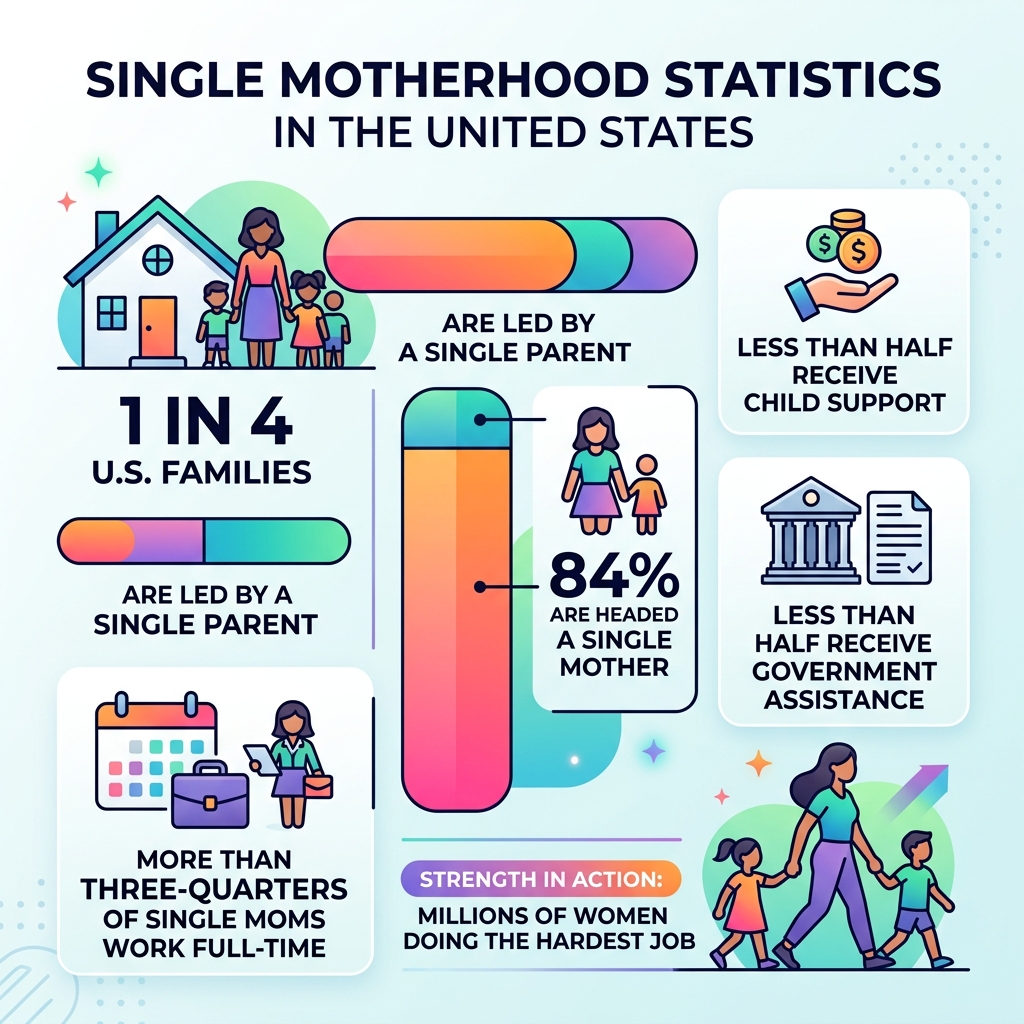
Nearly 1 in 4 families in the U.S. is led by a single parent. Of those, 84% are headed by a single mother. More than three-quarters of single moms work full-time. Less than half receive child support or government assistance.
That means millions of women are doing the hardest job in the world largely on their own.
And yet – they’re doing it. Imperfectly, exhaustedly, and remarkably.
If you’ve ever felt the weight of every decision, every meal, every bedtime falling on your shoulders alone, that feeling is real. It’s not weakness. It’s the math of solo parenting.
One single mom described herself as “overly-caffeinated, perpetually guilt-ridden, sometimes depressed, usually anxious” – and still showing up every single day. That’s not failure. That’s strength in action.
This guide is for every mom in that same boat. Not to tell you to do more, but to help you do it smarter, with less guilt, and with a lot more support.
Master Your Daily Routine and Support Systems

When you are the “only pro in the house,” time is your most valuable currency. Effective time management isn’t about being a drill sergeant; it’s about creating a framework that allows the household to run even when you’re exhausted. We recommend starting with a central “command center”—a simple white-board or calendar where everyone can see the week’s plan.
Using parenting-hacks-for-busy-moms like prepping outfits the night before or setting a strict “lights out” time can save you thirty minutes of morning chaos. Early bedtimes are a psychological lifesaver. When the kids are asleep by 8:00 PM, you gain a few precious hours to be a person, not just a parent.
Establishing Predictable Routines for Harmony
Consistency is the secret sauce of a happy home. For children, especially those navigating the changes of a single-parent household, routines provide a sense of psychological security. They know what to expect, which reduces anxiety and power struggles.
We suggest focusing on two main “anchor” points:
- Morning Rituals: A set sequence (breakfast, teeth, shoes) that becomes muscle memory.
- Evening Wind-downs: Lowering the lights, reading a story, and a “check-in” conversation about their day.
These routines don’t just help the kids; they provide you with a roadmap so you don’t have to make a thousand tiny decisions while your coffee is still brewing. For more on building these foundations, check out our advice-for-single-parents.
Strategic Screen Time and Simplified Meals
Let’s have a “real talk” moment: Screen time is a valid tool. If you need thirty minutes to cook dinner or simply sit in silence so you don’t snap, the TV is your temporary co-parent. Use it strategically and without guilt.
Similarly, simplify your meals. You don’t need to be a five-star chef every night. Nutritious shortcuts like rotisserie chickens, frozen veggies, or “breakfast for dinner” (cereal and fruit) are perfectly acceptable. Lower your expectations for a “Pinterest-perfect” home. There is a massive difference between sanitary and tidy. A house can be clean and healthy even if there are toys on the floor and laundry in the basket.
Prioritizing Self-Care and Mental Well-being
A shocking 78% of women report putting off their own needs to care for their families. As a single mom, this “martyrdom tendency” is a fast track to burnout. Self-care isn’t just bubble baths; it’s the discipline of maintaining your mental health so you can show up for your kids.
Overcoming Mom Guilt and Building Self-Worth
Mom guilt is a universal phenomenon, but for single moms, it can feel like a heavy blanket. You might feel guilty for working long hours or for not having a second parent in the home. It is vital to reject the idea of perfectionism. Your worth is not tied to how “busy” you are or how clean your baseboards are.
Celebrate your small wins. Did everyone get to school with shoes on? Did you handle a tantrum without losing your cool? That’s a victory. Your children don’t need a perfect mother; they need a healthy one.
Combating Burnout with Realistic Expectations
Burnout happens when your “output” exceeds your “input” for too long. To combat this:
- Learn to say no: You don’t have to volunteer for every school bake sale.
- Intentional play bursts: Dedicate 15 minutes of device-free, focused play with your kids. It fills their “attention tank” and reduces your guilt when you need to do chores later.
- Model healthy responses: When you’re stressed, tell your kids: “Mommy is feeling a little frustrated right now, so I’m going to take five deep breaths.” This teaches them emotional regulation.
Essential Financial Advice for a Single Mom
Managing a household on a single income is a balancing act. With more than three-fourths of single parents working full-time, the challenge is often how-to-balance-work-and-parenting while keeping the lights on.
| Strategy | Benefit | How to Start |
|---|---|---|
| Budgeting Apps | Real-time tracking | Use apps like Mint or YNAB |
| Debt Payoff | Reduces monthly stress | Focus on high-interest cards first |
| Sinking Funds | Prepares for emergencies | Set aside $10-$20 a week |
| Secondhand Shopping | Saves hundreds | Use thrift stores or Facebook Marketplace |
Budgeting for Basics and Personal Treats
Financial organization is about control, not restriction. Create a simple spreadsheet to track every dollar. Knowing exactly where your money goes reduces the “midnight panic” about bills.
We also advocate for a “Self-Care Fund.” Even if it’s just $5 a week, save specifically for a treat – a fancy coffee, a new book, or a manicure. Treating yourself occasionally isn’t a luxury; it’s a reminder that you are a person with desires and needs, not just a bill-paying machine.
Accessing Government and Community Assistance
There is no shame in using resources designed to help families thrive. If you are struggling, look into:
- SNAP and WIC: Essential for nutritional support.
- Childcare Subsidies: Check ChildCare.gov for state-specific grants.
- Tax Credits: Ensure you are claiming the Child Tax Credit and Earned Income Tax Credit.
For more detailed strategies on navigating the professional side of solo parenting, explore how-to-balance-work-and-parenting-2.
Navigating Co-Parenting and New Relationships
Whether you are co-parenting with an ex or doing it entirely alone, boundaries are your best friend. Communication should be business-like, focused entirely on the well-being of the children.
Co-parenting Advice for a Single Mom
One of the most common headaches is the “clothing exchange”—kids go to the other house in nice clothes and come back in rags. We suggest having a dedicated “transition bag” or a set of clothes that stays at each house to minimize conflict.
Always aim to “honor the father” in front of the kids, even if you disagree with his choices. Badmouthing the other parent often hurts the child more than the parent. Keep adult issues private, and use a how-to-master-your-holiday-co-parenting-calendar to prevent last-minute scheduling wars.
Dating Safety and Advice for a Single Mom
When you feel ready to date, move slowly. Your safety and your child’s safety are the only things that matter.
- High Standards: You aren’t just looking for a partner; you’re looking for someone who respects your life as a mother.
- Early Disclosure: Mention you have kids early on. It filters out those who aren’t ready for that reality.
- Vetting: Research backgrounds and trust your gut. If someone seems “too perfect” or pushes to meet your kids too soon, that’s a red flag.
- The 6-Month Rule: Many experts suggest waiting at least six months before introducing a new partner to your children.
Parenting Strategies to Help Your Children Thrive
Children in single-parent homes can and do thrive. Research shows that a stable, loving relationship with one parent is far better for a child than living in a high-conflict two-parent home.
Fostering Positive Behaviors and Communication
Use an authoritative parenting style—this means being high in warmth but also high in structure.
- Active Listening: When your child is hurting or upset about the family dynamic, don’t try to “fix” it immediately. Say: “I hear you, and I’m sorry you’re hurting. I’m here for you.”
- Age-Appropriate Rules: Clear consequences provide a safety net. Children feel more secure when they know where the boundaries are.
- Family Rituals: Whether it’s Friday Night Pizza or Sunday Walks, these small traditions build a unique family identity that children cherish.
Success Stories and the Rewards of Solo Parenting
The long-term benefits of thriving as a single parent are profound. Children of single moms often grow up to be more independent, resilient, and empathetic. You are modeling strength, problem-solving, and unconditional love every single day.
Many single moms find that their bond with their children is incredibly deep because they’ve “weathered the storm” together. You aren’t just surviving; you are building a legacy of resilience.
Frequently Asked Questions about Solo Parenting
How can I find a support network from scratch?
Start small. Join local “Mom Groups” on Facebook, attend library story times, or look into faith-based groups. Don’t be afraid to “trade favors”—offer to watch a neighbor’s kid for two hours if they can do the same for you next week. Building a village requires the courage to ask for help first.
What are the best ways to handle financial stress alone?
Track everything. Use a “90-day restart plan” where you apply for all eligible benefits (SNAP, WIC, etc.), organize your documents, and set a strict budget. Knowing your numbers is the best way to kill financial anxiety.
How do I explain the other parent’s absence to my child?
Be honest but age-appropriate. Avoid blaming or venting. You might say, “Sometimes grown-ups can’t live together, but both of us love you very much,” or if the parent is truly absent, “I don’t have all the answers why they aren’t here, but I promise you are safe and loved in this house.”
Conclusion
At Curta Arte, we know that being a single mom is a marathon, not a sprint. It’s okay to feel tired. It’s okay to ask for help. By mastering your routines, prioritizing your own mental health, and parenting with intention, you move from just surviving to truly thriving. You are the “pro” in your house, and you’re doing a better job than you give yourself credit for.
