
Why Empathetic Solo Dad Guidance Changes Everything for Single Fathers
Empathetic solo dad guidance is the practice of using self-awareness, compassion, and active listening to parent more effectively as a single father — while also taking care of your own emotional needs.
If you’re a solo dad looking for quick, actionable support, here’s what the research shows works best:
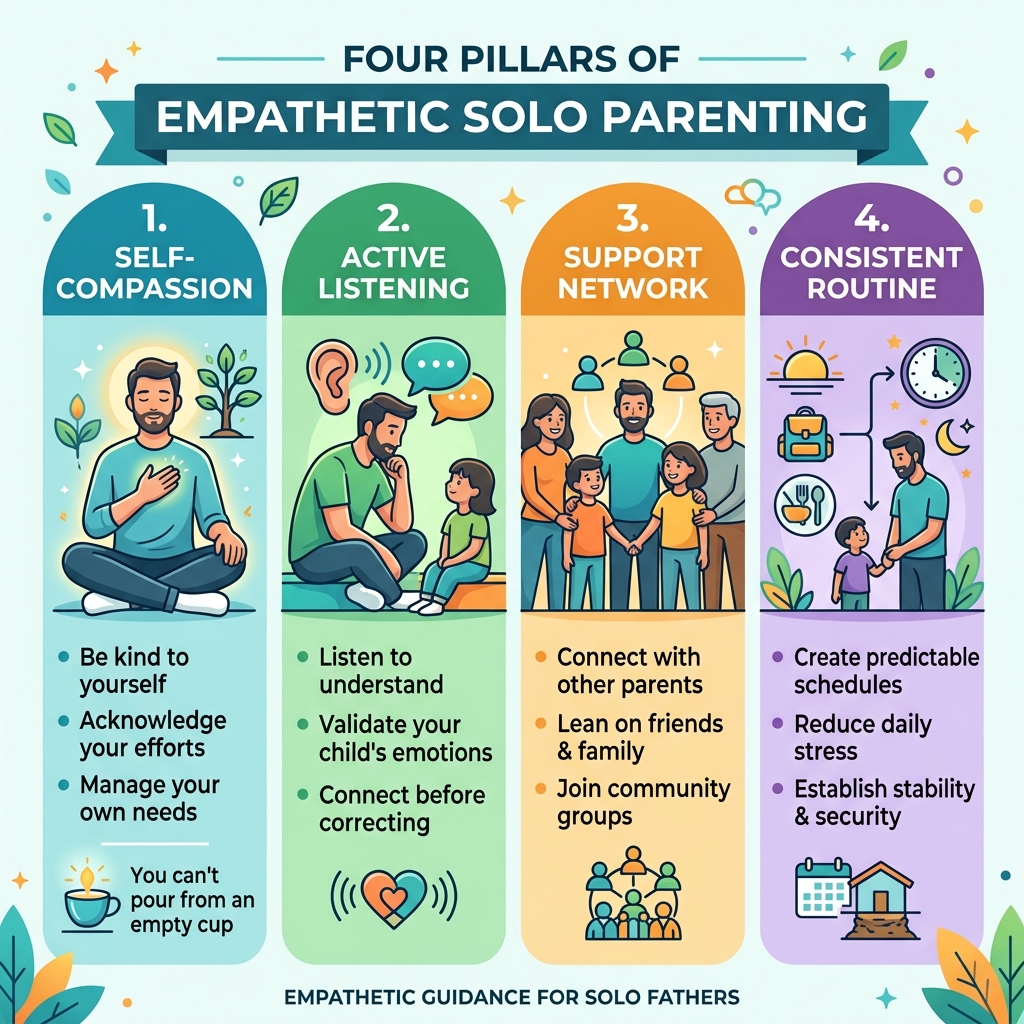
- Practice self-compassion first — you can’t pour from an empty cup
- Use active listening with your kids to validate their emotions, not just solve problems
- Build a support network of other parents, family, and community groups
- Speak neutrally about your co-parent to protect your child’s emotional well-being
- Set consistent routines to give your kids stability and reduce daily stress
- Seek professional support (therapy, coaching, or men’s groups) when things feel overwhelming
No one becomes a father expecting to do it alone. Yet millions of men find themselves navigating school runs, bedtime routines, emotional meltdowns, and financial pressure — all without a partner by their side.
The transition is brutal. Research consistently shows that fathers face a unique set of barriers: fewer social support networks than moms, a court system that can feel stacked against them, and a society that still questions whether men can be nurturing caregivers.
And yet, the science is clear. When dads show up — emotionally present, not just physically present — children thrive. They develop stronger self-esteem, better behavior, and healthier emotional lives.
One dad who went through a co-parenting program put it simply: “It helped me communicate with my son and release anger toward his mother.” That shift — from resentment to empathy — is exactly what this guide is about.
This isn’t about being a perfect dad. It’s about being an intentional one.
Navigating the Unique Challenges of Solo Fatherhood
When we step into solo parenting as men, it often feels like we are playing the game of life on “hard mode.” Unlike moms, who often have built-in networks like “mommy-and-me” classes or specific government programs, dads frequently find themselves on a lonely island. Societal stereotypes still whisper that men are “secondary” caregivers or that we aren’t naturally made for nurturing. We know that’s not true, but the pressure to be the “tough provider” while also being the “tender nurturer” can lead to deep-seated insecurity.
Loneliness is perhaps the most pervasive challenge. Many solo dads report feeling like “the bad guy” or “the problem” following a separation, as friends and family often take sides. This isolation is compounded by the practical realities of managing a household alone. Statistics show that poverty affects about a quarter of solo parents, and the financial burden of maintaining a home on a single income is a constant weight.
The legal landscape doesn’t always help. Many fathers feel undervalued in family courts, where earlier mindsets sometimes favor mothers in custody battles. This can lead to a grueling emotional and financial drain—some dads report spending tens of thousands of dollars just to secure joint legal custody.
Despite these hurdles, the Scientific research on the impact of father involvement on child development is undeniable. Active, involved dads lead to kids who thrive academically, socially, and emotionally. To make this work, we have to find a way to balance the logistics of daily life with the emotional needs of our children. We’ve put together some foundational advice-for-single-parents to help you navigate these early days.
One of the biggest hurdles is learning how-to-balance-work-and-parenting. It might mean asking for flexible hours, changing roles, or even moving closer to family. It requires us to put our egos aside and admit that we cannot do this alone.
Mastering Empathetic Solo Dad Guidance Through Self-Compassion
To provide empathetic solo dad guidance for our children, we must first learn to be empathetic toward ourselves. Many of us carry “inner child” wounds—memories of our own fathers who may have been emotionally distant or physically absent. Healing these wounds involves reflecting on what we missed in our own childhoods and deciding to provide something different for our kids.
Self-compassion isn’t “soft”; it’s a survival skill. When we practice self-compassion, we stop the cycle of self-doubt that tells us we aren’t enough. One effective way to build this is through gratitude journaling. Even on the hardest days, finding three things to be grateful for—perhaps even something small about your child’s mother—can shift your mindset from scarcity to abundance.
Another vital tool is the “pause” technique. When a child is screaming or the house is a mess, and you feel your anger rising, say, “I need 15 minutes.” Commit to circling back when you are levelheaded. This prevents us from reacting out of stress and allows us to respond with empathy.
Taking care of your own mental health is a prerequisite for helping your children. We suggest looking into mental-health-tips-for-children to understand how your emotional state directly mirrors theirs. If we are stressed and unregulated, they will be too.
Performance-Based Parenting vs. Empathetic Parenting
| Feature | Performance-Based Parenting | Empathetic Parenting |
|---|---|---|
| Focus | Results, grades, and “good” behavior | Connection, feelings, and understanding |
| Love | Feels earned through achievements | Unconditional; “I love you because you’re mine” |
| Mistakes | Met with harshness or shame | Used as teaching moments |
| Communication | Lectures and orders | Active listening and validation |
| Goal | Compliance and outward appearance | Emotional intelligence and secure attachment |
Practicing Self-Forgiveness as a Solo Parent
We are going to make mistakes. We will lose our tempers, forget the permission slip, or serve cereal for dinner three nights in a row. The key is practicing self-forgiveness. When we mess up, we have a golden opportunity to model vulnerability.
Apologizing to your child—”I’m sorry I yelled, I was feeling frustrated and I didn’t handle it well”—teaches them that it’s okay to be human. This builds a growth mindset in the home, where mistakes are seen as opportunities to learn rather than failures. These are the same tips-for-raising-confident-children we advocate for: showing them that confidence comes from resilience, not perfection.
Sustaining Your Capacity for Empathetic Solo Dad Guidance
Burnout is the silent enemy of the solo father. To sustain your capacity for empathetic solo dad guidance, you must set firm boundaries. This means saying no to extra work projects that eat into family time or setting boundaries with an ex-partner who might be overstepping.
Physical health is the foundation of mental health. Aim for 7-9 hours of sleep (we know, it’s hard!) and regular exercise. Even a 20-minute walk can release the endorphins needed to manage anxiety. We’ve found that parenting-tips-for-family-bonding work best when the dad is physically and mentally present, not just a “zombie” going through the motions.
Fostering Emotional Intelligence and Secure Attachments
The heart of empathetic parenting is active listening. We often hear the phrase “listen with your eyes.” This means putting the phone down, getting down to your child’s eye level, and giving them your undivided attention. When your child is having a “big emotion,” they aren’t trying to be difficult; they are having a difficult time.
Instead of trying to “fix” the problem immediately, validate the feeling. “It sounds like you’re really frustrated that we have to leave the park. I get it, leaving is hard.” This simple act of validation builds a secure attachment, making the child feel safe and understood.
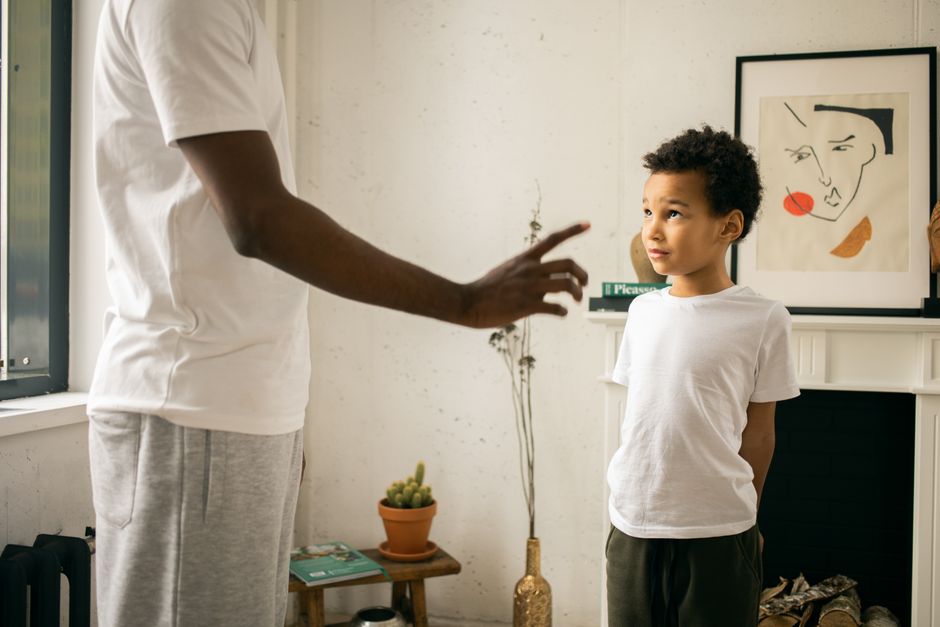
Effective communication isn’t just about what you say, but how you listen. For more on this, check out our tips-for-effective-communication-with-kids. When it comes to discipline, empathy doesn’t mean a lack of rules. It means enforcing rules with a calm vibe. If you’re struggling with outbursts, our guide on how-to-handle-tantrums-in-children offers practical ways to stay the rock for your child during their emotional storms. By remaining levelheaded, you show them how-to-improve-child-behavior-at-home through modeling, not just lecturing.
Empathetic Solo Dad Guidance for Every Age Group
Being an intentional father looks different as your children grow. Here is a breakdown of how to apply empathy at every stage:
- Infants (0-12 months): Focus on skin-to-skin contact and stroller walks. Research shows infants can form strong attachments to multiple caregivers. Being the “nurturing” one now sets the stage for life.
- Toddlers & Preschoolers (1-5 years): Offer simple choices (e.g., “Do you want the blue shoes or the red ones?”). This builds autonomy. Use effective-discipline-techniques-for-kids that focus on teaching rather than punishing.
- Elementary Schoolers (6-12 years): Call attention to positive behaviors. Make eye contact and take their “bids for attention” seriously. If they ask, “Does this drawing look good?” they are really asking for validation.
- Teenagers (13-18 years): Take an interest in their hobbies, even if you don’t “get” them. If they love a certain video game or style of music, be curious. Apologize when you’re wrong—it’s the most powerful way to keep communication lines open.
Building a Resilient Support Network and Co-Parenting Strategy
We’ve all heard that “it takes a village,” but for a solo dad, building that village requires proactive effort. You have to admit, humbly, that you can’t do this alone. Reach out to your kid’s friends’ parents, get involved in the PTA, or join a local men’s support group.
Reciprocal help is the currency of the village. Offer to take a neighbor’s kid to soccer practice one day, and they’ll likely return the favor when you’re stuck at work. This “work or support trade” reduces the feeling of being on an island and provides your children with a broader community of mentors.
When it comes to co-parenting, empathy is your greatest weapon—even if the separation was “nasty.” We must avoid “keeping score” with the other parent. If you’re constantly tracking who did what, the only losers are the children. Focus on your own actions and your kids’ impact.
Neutral communication is key. Never use your child as a spy or an emotional support system. Direct your intense emotions toward a therapist or a trusted adult friend. Scientific research on cooperative co-parenting shows that children who see their parents communicating respectfully—even if they live apart—have significantly lower rates of anxiety and depression.
Navigating Custody Challenges with Empathy
The court system can be a nightmare of “legal mumbo-jumbo” and high fees. Navigating this with empathy means keeping your child’s well-being at the center of every decision. It’s not about “winning”; it’s about ensuring the child has a stable, loving relationship with both parents whenever possible.
Shared calendars and co-parenting apps can help reduce the friction of scheduling. If you find yourself in a grueling custody battle, stay resilient. Focus on building a stable, loving home, even if it’s just a “card table and a TV” to start. Your presence matters more than the furniture. Many dads find that professional coaching helps them manage the emotional tug-of-war of the legal process while staying focused on being a great dad.
Frequently Asked Questions about Solo Fatherhood
How can single dads practice self-compassion daily?
Start by acknowledging that you are doing a difficult job. Use the “pause” technique during stressful moments and keep a gratitude journal. Most importantly, forgive yourself for the small mistakes. If you wouldn’t say it to a friend, don’t say it to yourself.
What are the best ways to build a support network as a solo father?
Look for community groups on Facebook or Next Door. Reach out to parents at your child’s school. Don’t be afraid to join men-specific therapy or support groups—vulnerability is a path to resilience. Offer help to others first to build a foundation of reciprocity.
How does empathetic parenting improve child behavior?
When children feel heard and validated, their need to “act out” to get attention decreases. By using active listening and emotional check-ins (like the “zones of emotions” system), you help them regulate their own feelings, leading to fewer tantrums and better cooperation.
Conclusion
At Curta Arte, we believe that the journey of the modern solo father is one of incredible strength, love, and growth. While the challenges are real—from societal stereotypes to the “hard mode” of daily logistics—the rewards of being an intentional, empathetic father are life-changing for both you and your child.
By prioritizing self-compassion, mastering active listening, and building a resilient village, you aren’t just surviving; you are leading with empathy. You don’t have to be Superman. You just have to be present.
If you’re looking for more guidance on your parenting journey, we invite you to Discover more resources at Curta Arte. You’ve got this, Dad. Keep loving, keep learning, and keep leading.
