
Why Finding the Right Resources for Single Parents Changes Everything
Resources for single parents span a wide range of programs — from government assistance to community nonprofits — and knowing where to start can save you time, money, and stress.
Here are the key categories of support available right now:
- Financial aid – SNAP, TANF, LIHEAP, WIC, and emergency grants
- Housing – Section 8, HUD shelters, Habitat for Humanity, rapid rehousing
- Health care – Medicaid, CHIP, free clinics, prescription assistance
- Legal help – pro bono family law, custody support, domestic violence advocacy
- Career and education – job training, scholarships, FAFSA, apprenticeships
- Childcare – Head Start, after-school programs, childcare subsidies
- Transportation – vehicle donations, free car repairs, transit assistance
- Community – support groups, mentoring, podcasts, online networks
Being a single parent is one of the hardest jobs in the world. You are the cook, the breadwinner, the homework helper, and the emotional anchor — all at once, with no days off.
And the numbers reflect just how common this is. Nearly one in two children in the United States will live in a single-parent home at some point before they turn 18. Yet many parents raising kids alone still feel like they are doing it without a safety net.
Some earn too much to qualify for government programs but not enough to comfortably cover rent, groceries, childcare, and car repairs all at once. Others simply do not know what help exists or how to access it.
The good news? There is more support out there than most people realize. This guide pulls it all together in one place.
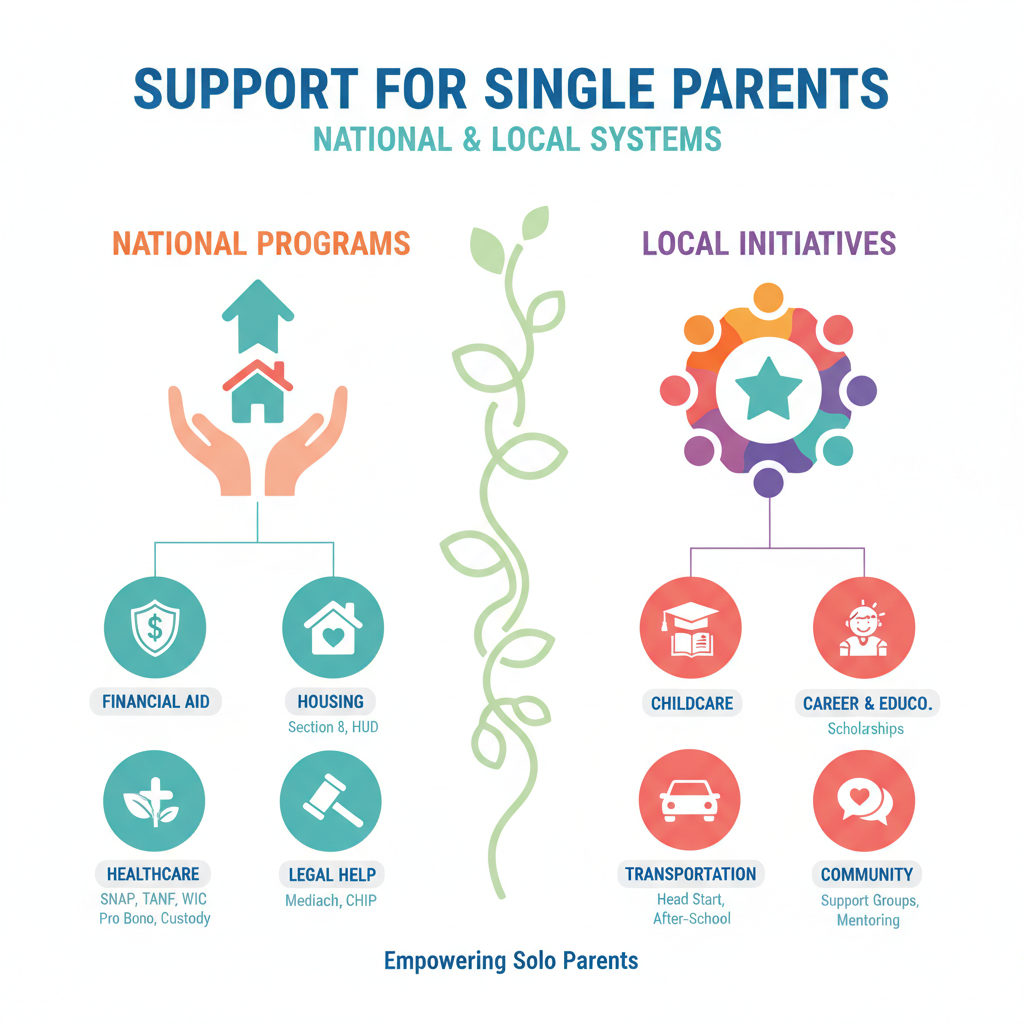
Essential Financial and Housing resources for single parents
When you are the sole provider, the math of monthly bills can feel like a constant puzzle. Financial instability is one of the primary drivers of stress in solo-parent households. Statistics show that children in single-parent families often do not have the same economic resources as those in two-parent homes, making it vital to bridge the gap with available aid.

There are several core government programs designed to provide a floor for families:
- TANF (Temporary Assistance for Needy Families): This provides monthly cash assistance to help families with low incomes pay for basics like laundry, shoes, and household supplies. It often includes job placement services to help you reach independence.
- SNAP (Supplemental Nutrition Assistance Program): Formerly known as food stamps, this can provide up to $800+ per month for eligible families to spend on groceries.
- WIC (Women, Infants, and Children): This is a specific nutrition program for pregnant women, new mothers, and children under five. It provides specific healthy foods (like milk and eggs) and breastfeeding support.
- LIHEAP (Low Income Home Energy Assistance Program): This federal program helps families keep their lights and heat on by assisting with high utility bills.
- Kinship Care Subsidy Program (KCSP): If you are a relative (like a grandparent or aunt) raising a child, you may be eligible for cash assistance—sometimes around $450 per month per child—to help cover their needs.
For housing, the U.S. Department of Housing and Urban Development (HUD) offers Section 8 vouchers, which allow you to find your own rental while the government pays a portion of the rent. If you are looking toward long-term stability, organizations like Habitat for Humanity partner with families to build and buy affordable homes through sweat equity and manageable mortgages.
Applying for Government Assistance Programs
The biggest hurdle is often the paperwork. We recommend starting with 2-1-1. By dialing 211 on your phone or visiting their website, you can be connected to a local specialist who knows exactly which programs are open in your specific zip code.
When applying, keep a dedicated “Benefits Folder.” Include copies of birth certificates, social security cards, and recent pay stubs. Many parents lose benefits simply because they missed a renewal deadline or a piece of mail. Setting digital reminders on your phone for “paperwork due dates” is one of our favorite parenting hacks for busy moms and dads to stay organized.
Emergency Financial and Utility Aid
Sometimes, you don’t need a long-term program; you just need to get through this Tuesday. If you are facing a shut-off notice for water or electricity, the Salvation Army and Volunteers of America often have small crisis grants to help.
Local community action agencies often manage “Crisis LIHEAP” funds that can be processed faster than standard applications. Don’t wait until the power is out to call; most organizations require a “notice of termination” to trigger emergency funds. Reducing this financial friction allows you more mental space for parenting tips for family bonding and creating a peaceful home life.
| Program | Primary Benefit | Best For |
|---|---|---|
| SNAP | Monthly EBT funds | Groceries and nutrition |
| TANF | Monthly cash | Rent, bills, and clothing |
| WIC | Specific food items | Infants and toddlers |
| Section 8 | Rental vouchers | Long-term housing stability |
| LIHEAP | Utility payments | Heating and cooling costs |
Health, Wellness, and Legal Advocacy
Your health is the engine that keeps your family running. If you go down, the whole system feels the strain. Accessing resources for single parents in the healthcare sector is about more than just medicine; it’s about maintaining your capacity to parent.
Medicaid and the Children’s Health Insurance Program (CHIP) are the gold standards for low-income families, often covering everything from dental visits to vaccinations with little to no co-pay. In many states, postpartum Medicaid coverage has been extended to 12 months after birth, ensuring new solo parents have the care they need during a vulnerable time.
For those who don’t qualify for Medicaid, Federally Qualified Health Centers (FQHCs) offer “sliding scale” fees based on your income. You can also find prescription assistance through programs like NeedyMeds or GoodRx to lower the cost of essential medications.
Mental Health and Wellness resources for single parents
The mental load of solo parenting is heavy. It is common to feel “drowning” under the weight of responsibility. Scientific research on single parent mental health highlights that social support and targeted stress management are key to preventing burnout.
Many community centers offer free or low-cost counseling. If you are struggling with addiction, organizations provide peer-led recovery groups that understand the specific challenges of staying sober while raising children alone. Self-care isn’t a luxury; it’s a maintenance requirement. We have shared more on this in our advice for single parents section, emphasizing that you cannot pour from an empty cup.
Legal Aid and Advocacy resources for single parents
Navigating family court can be terrifying, especially if you are facing it without a lawyer. Legal Aid societies in most cities provide pro bono (free) representation for low-income parents dealing with:
- Child Support: Tracking down a non-custodial parent and ensuring they contribute to the child’s upbringing.
- Custody Disputes: Establishing a safe, consistent schedule for the children.
- Domestic Violence: Securing restraining orders and safe housing through the Violence Against Women Act (VAWA) protections.
Many states now mandate Divorce Education or Co-parenting classes. While they might feel like another chore, these classes provide vital parenting tips for children’s development by teaching you how to shield your kids from adult conflict.
Career Growth, Education, and Technology
Financial independence is the ultimate goal for most solo parents. Moving from “surviving” to “thriving” usually requires a boost in earning power, which often means going back to school or learning a new trade.
Educational and Career Development Tools
Every year, nearly 800,000 adults take high school equivalency tests to open doors to better jobs. If you already have your diploma, the FAFSA (Free Application for Federal Student Aid) is your ticket to Pell Grants, which do not have to be paid back.
Specific scholarships exist just for us! Some non-profits offer “bridge scholarships” for working parents who earn too much for government aid but need help covering tuition. Programs like Dress for Success provide professional attire and interview coaching to help you land that life-changing role. Balancing these ambitions requires a plan, so check out our guide on how to balance work and parenting to keep your sanity intact.
Technology and Internet Access
The internet is not a luxury; it is a utility. You need it for your kids’ homework and your own job searches. While the Affordable Connectivity Program (ACP) ended recently, the Lifeline program still provides discounted phone and internet service for those on SNAP or Medicaid.
Companies like Cox offer “Connect2Compete” internet for around $9.95/month for qualifying families with K-12 students. If you need hardware, look for local “computer refurbishers” or non-profits that donate laptops to students and job seekers. Having the right tools makes it much easier to learn how to balance work and parenting in a remote-friendly economy.
Community Connection and Daily Logistics
Isolation is the “silent struggle” of solo parenting. Having a “village” isn’t just a nice idea; it’s a logistical necessity. Whether it’s finding someone to watch the kids for an hour or getting a ride to work, community resources for single parents fill the gaps that money can’t always reach.
Building a Support Network
Connecting with others who “get it” is transformative. Organizations like The Single Parent Project and Circle of Parents offer support groups where you can share strategies and emotional weight.
For your children, Big Brothers Big Sisters provides mentoring that can offer your kids additional positive role models and experiences. If you have younger children, Head Start provides not just early education, but a comprehensive support system for the whole family, including health screenings and nutrition. It’s a great way to get advice for parents of preschoolers while ensuring your child is school-ready.
Specialized Support for Single Fathers and Choice-Based Parents
Single fathers often face a different kind of stigma and may feel out of place in “mom-centric” groups. Fortunately, Fatherhood Initiatives are growing nationwide, focusing on the unique needs of dads raising kids alone.
We also see a rise in Single Parents by Choice (SPBC). These are individuals who choose to become parents via adoption, surrogacy, or donor assistance. These parents often need specialized legal and financial advice to navigate the high costs of adoption (which can range from $30,000 to $60,000) or fertility treatments. Regardless of how you became a solo parent, the day-to-day challenges of raising toddlers remain the same, and the community is here to help.
Frequently Asked Questions about Resources
How do I apply for TANF, SNAP, or Medicaid?
The fastest way is to apply online through your state’s “Benefits Portal” (often called PEAK, MyAccount, or similar). You can usually apply for all three at once. If you prefer in-person help, visit your local Department of Human Services or dial 211 to find an enrollment specialist.
What emergency resources are available for homelessness or domestic violence?
If you are in immediate danger, call the National Domestic Violence Hotline at 800-799-SAFE. For housing crises, HUD-funded emergency shelters and “Rapid Rehousing” programs can provide immediate beds and help you transition into a permanent home. Many shelters specifically cater to women and children to ensure a safe environment.
Where can I find scholarships specifically for single parents?
Start with the National Resource Guide at The Life of a Single Mom or search for “Single Parent Scholarships” followed by your specific state. Many local community foundations offer grants specifically for solo parents returning to school. Don’t forget to fill out the FAFSA first, as many scholarships require it.
Conclusion
At Curta Arte, we know that being a solo parent is a marathon, not a sprint. Writers like Aria James are dedicated to providing the empathetic guidance you need to navigate these hurdles. Whether you are dealing with a difficult divorce or navigating the world as a single parent by choice, your strength is remarkable, but you don’t have to be strong alone.
By tapping into these resources for single parents, you aren’t just getting a “handout”—you are building a foundation for your family’s future. Explore more parenting tips and support on our site to keep growing, connecting, and thriving. You’ve got this, and we’ve got you.
