
Why Educational Games for Kids Are a Game-Changer for Busy Parents
Educational games for kids are interactive activities — digital or physical — designed to build real academic skills while keeping children genuinely engaged.
Here’s a quick overview of what they offer:
- What they teach: Math, reading, phonics, coding, logic, science, and social-emotional skills
- Who they’re for: Children from ages 2 through middle school (grades 1–8)
- Where to use them: At home, in the classroom, or on the go (many work offline)
- Top benefits: Builds confidence, supports curriculum standards, adapts to your child’s level
- Best-known options: Khan Academy Kids (free, ages 2–8), Prodigy (grades 1–8), Teach Your Monster (phonics), MathHero (ages 5–10)
If you’re raising kids on your own, you know the feeling well. There’s homework to supervise, meals to make, and only one of you to do it all. Finding tools that actually teach while keeping kids happily occupied isn’t a luxury — it’s a lifeline.
The good news? The landscape of educational games has changed dramatically. Today’s best options aren’t mindless screen time. They’re built with early education specialists, aligned to school curricula, and designed to meet kids exactly where they are.
Research backs this up. Platforms like Prodigy Math meet ESSA Tier 3 standards, and studies on game-based learning consistently show positive effects on both academic outcomes and kids’ attitudes toward learning. One survey found that 91% of kids actually enjoy using Prodigy Math — a number most traditional worksheets could never dream of.
The difference between a good educational game and a bad one comes down to a few key things: expert design, no intrusive ads, privacy protections, and content that genuinely challenges kids at their level. This guide covers all of it.
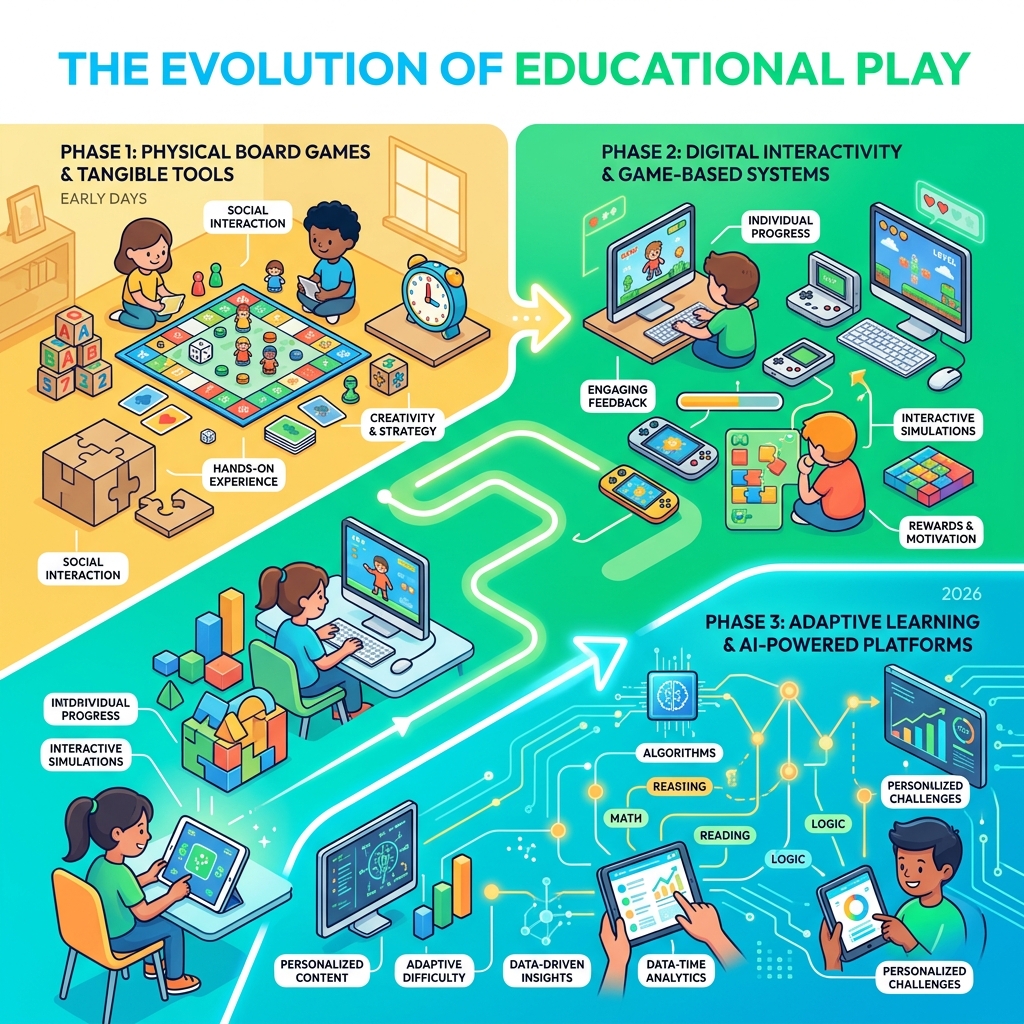
Why Educational Games for Kids Outperform Traditional Learning
Traditional learning often relies on passive consumption—listening to a lecture or filling out a static worksheet. While these methods have their place, they often lack the immediate feedback loop that children crave. Educational games for kids flip this script by turning the learner into an active participant.
When a child plays an educational game, they aren’t just absorbing information; they are applying it. This active engagement triggers multiple neural pathways, especially when the games use multisensory interaction. For example, some platforms use physics-based simulations to make abstract math concepts feel tangible. Instead of just seeing “2 + 2,” a child might see two blocks physically merge into a larger one, creating an intuitive understanding of the world.
Furthermore, these games provide “intrinsic motivation.” In a traditional setting, the “reward” for finishing work is often just… more work. In a game, the reward is unlocking a new level, rescuing a pet, or uncovering a story. This keeps kids coming back without us having to nag them. For more on how to keep things engaging, check out our guide on interactive learning activities making education fun for kids.
One of the most powerful features of modern platforms is “adaptive learning.” This means the game actually watches how your child performs. If they are breezing through addition, the game automatically introduces harder challenges. If they struggle, it provides hints and simpler problems to build back their confidence. This is exactly how Prodigy Game: Playful Math and English Practice works, ensuring that 1st to 8th graders are always challenged but never overwhelmed.
Social-Emotional Benefits of Educational Games for Kids
As single parents, we often worry about our children’s emotional resilience. We want them to be confident and capable of handling frustration. Surprisingly, educational games for kids are fantastic tools for social-emotional growth.
Games provide a “safe space to fail.” In a classroom, getting an answer wrong can feel embarrassing. In a game, it’s just part of the process. This builds resilience—the ability to try again after a setback. Many high-quality apps also include characters that model empathy and problem-solving.
Take the Free Learning App for Kids Ages 2-8 | Khan Academy Kids as an example. It doesn’t just focus on the ABCs; it integrates social-emotional content that helps young children understand their feelings and how to interact with others. This holistic approach supports the “whole child,” blending academic skill-building with creative play and emotional intelligence.
Mastering Literacy with Educational Games for Kids
Reading is the foundation of all other learning, but it can be one of the most frustrating subjects for a child to master. Educational games for kids break down literacy into manageable, fun bites.
Effective literacy games focus on phonemic awareness—the ability to hear and manipulate sounds in words. By using “find and tap” mechanics or matching silhouettes, children build their vocabulary and handwriting preparation without even realizing they are “studying.” We’ve seen how these tools can be transformative for unleashing linguistic skills language learning games.
A standout in this category is Teach Your Monster: Free Phonics, Reading and Mathematics Games. Designed in collaboration with academic experts, it turns the difficult task of learning to read into a magical adventure. It complements the programs used in schools, making it a perfect bridge between classroom learning and home practice.
Essential Features of High-Quality Learning Platforms
Not all “educational” apps are created equal. As parents, we’ve all downloaded a “free” game only to find it’s riddled with ads or requires a purchase every five minutes to keep playing. When we are looking for quality educational games for kids, we should prioritize these key features:
- Expert Design: Was the game made by teachers and child development experts? Look for apps created in collaboration with institutions like Stanford or those that align with the Head Start Early Learning Outcomes Framework.
- Curriculum Alignment: Does the game teach what your child is actually learning in school? High-quality platforms often align with Common Core or state standards.
- Ad-Free Experience: Ads are distracting and can sometimes lead kids to inappropriate content. An ad-free environment ensures focused, safe play.
- Data Privacy: Ensure the platform has a strict privacy policy and does not collect or sell children’s personal information.
| Feature | High-Quality Platforms | Low-Quality “Edu-tainment” |
|---|---|---|
| Ads | 100% Ad-free | Frequent pop-ups and interruptions |
| Learning Path | Adaptive (grows with the child) | Static (same for everyone) |
| Curriculum | Research-backed & standards-aligned | Random puzzles with no clear goal |
| Parental Tools | Progress dashboards & insights | No way to track what is being learned |
| Cost Model | Transparent (Free or Subscription) | “Freemium” with aggressive in-app buys |

A great example of a platform that hits all these marks is MathHero | All‑in‑One Math Game App for Kids Ages 5–10. It offers an ad-free experience with studio-quality production, making it feel like a “real” game while focusing on math mastery through personalized difficulty levels.
Top Subjects Mastered Through Interactive Play
While math and reading are the “big two,” educational games for kids now cover a vast array of subjects. From coding to science and even “adventurous eating,” there is a game for almost every skill.
- Coding: Many games now use “drag and drop” commands to teach the logic of programming. This helps kids develop critical thinking and sequential logic.
- Science: Interactive simulations allow kids to explore mammals, the states of matter, or even the solar system in a way a textbook never could.
- Social Studies: Strategy games like chess or games exploring different cultures help broaden a child’s worldview.
In the realm of mathematics, we love how some apps turn numbers into characters. For instance, teaching numbers the fun way often involves narrative stories that make logic and sorting feel like a quest. MATH MAKERS uses over 600 puzzles to help kids aged 4–10 fall in love with math by using physics-based gameplay that makes abstract concepts feel real.
Strengthening Mathematics and Logic
Math anxiety is a real thing, even for little ones. Educational games for kids can transform that anxiety into confidence by replacing high-stakes testing with low-stakes play. Whether it’s practicing multiplication facts or understanding fractions, games provide the “smart practice” kids need.
For those focusing specifically on the dreaded times tables, Multiplication by Kahoot! (part of the DragonBox series) is a lifesaver. It uses wacky mini-games to help kids teach themselves multiplication. Similarly, if you have a younger child, you might look into fun with math interactive games for preschoolers to build that early foundation of counting and shapes.
Enhancing Cognitive Skills and Problem Solving
Beyond specific school subjects, educational games for kids are excellent for building general “brain power.” This includes:
- Memory: Games that require remembering patterns or sequences.
- Attention: Activities that reward focus and spotting small details.
- Logic: Puzzles that require “if-then” thinking.
These skills are the building blocks of academic success. You can find many brain-boosting fun games for children that focus specifically on these cognitive enhancements, helping kids stay sharp and attentive.
Managing Screen Time and Privacy for Families
As single parents, we often use screens as a “digital babysitter” so we can get 15 minutes of peace to fold laundry or answer an email. There is no shame in that! However, we can make that time more productive by choosing high-quality educational content.
To manage screen time effectively, we recommend:
- Setting Boundaries: Use the built-in parental controls on tablets to limit play to 15–20 minutes a day.
- Choosing Offline Options: Look for apps that allow for offline play. This is great for car rides or doctor’s office waiting rooms where Wi-Fi might be spotty.
- Prioritizing Ad-Free: Apps like Khan Academy Kids are 100% free with no ads ever, which provides a much safer environment for preschoolers.
For more tips on navigating the digital world with little ones, see our thoughts on educational apps for preschoolers.
Frequently Asked Questions about Educational Games
Are educational games suitable for all age groups?
Yes! Educational games for kids are designed to cater to specific developmental stages.
- Toddlers (Ages 2–3): Focus on colors, shapes, and basic vocabulary. Check out educational games for toddlers for age-appropriate ideas.
- Preschool/Kindergarten (Ages 4–6): Focus on phonics, counting, and social-emotional skills.
- Elementary (Ages 7–11): Focus on multiplication, reading comprehension, and science.
- Middle School (Ages 12+): Focus on complex problem solving, coding, and history.
How do I integrate these games into a busy home schedule?
You don’t need to overthink it. Many experts recommend just 10–15 minutes of daily play to see steady progress. You can use these games as:
- A Reward: “Finish your chores, and you can play 15 minutes of Prodigy.”
- A Transition Tool: While you are preparing dinner, let them engage with a literacy game.
- A Supplemental Activity: If they are struggling with a specific concept at school, find a game that targets that skill.
If you want to mix things up with non-digital play, we also have great play and learn educational craft ideas that reinforce the same concepts offline.
Is there research supporting the effectiveness of game-based learning?
Absolutely. This isn’t just “fun and games”; it’s science.
- ESSA Standards: Prodigy Math meets ESSA Tier 3 standards, which means there is evidence it positively impacts student growth.
- Teacher Trust: Over 3 million teachers around the world trust these platforms in their classrooms.
- Engagement Stats: When 91% of kids say they enjoy a learning tool, they are much more likely to stick with it and master the material.
Conclusion
At Curta Arte, we understand that being a single parent means wearing many hats. You are the provider, the nurturer, and the primary educator. Using educational games for kids isn’t “taking the easy way out”—it’s using modern technology to give your child a head start while giving yourself a much-needed break.
By choosing platforms that are expert-designed, ad-free, and curriculum-aligned, you are empowering your children to love learning. Whether they are battling math monsters or helping a funny alien learn to read, they are building the skills they need for a bright future.
Ready to find the perfect game for your little learner? Explore more educational games and resources on our site and turn screen time into “growth time” today!
