
You’re Running on Empty — Here’s How to Fix That
Self-care for single parents is not a luxury — it’s the foundation that keeps everything else from falling apart.
If you’re short on time, here’s what actually works:
- Start small. Even 5 minutes of intentional quiet time daily makes a real difference.
- Use micro-moments. Mindful coffee, a deep breath outside, a song you love on the commute — these count.
- Protect sleep and hydration. Aim for 7–9 hours of sleep and 8–12 cups of water per day.
- Build a support network. Childcare swaps, online groups, and asking for help are not signs of weakness.
- Drop the guilt. Taking care of yourself is taking care of your kids.
You do everything. You work, cook, comfort, and protect — often without backup.
It’s no surprise that a staggering 78% of women say they regularly put their own needs last to take care of their families. For single parents, that number probably feels low.
The mental load is relentless. By the end of the day, there’s nothing left — no energy, no quiet, no you.
But here’s the thing: skipping self-care doesn’t make you a better parent. It makes burnout inevitable. And burnout doesn’t just hurt you — it affects your kids too.
Think of it like the oxygen mask on an airplane. You have to put yours on first. Not because you matter more, but because you can’t help anyone if you’ve already passed out.
This article gives you real, practical strategies — not bubble-bath advice — for fitting genuine self-care into the chaos of solo parenting.
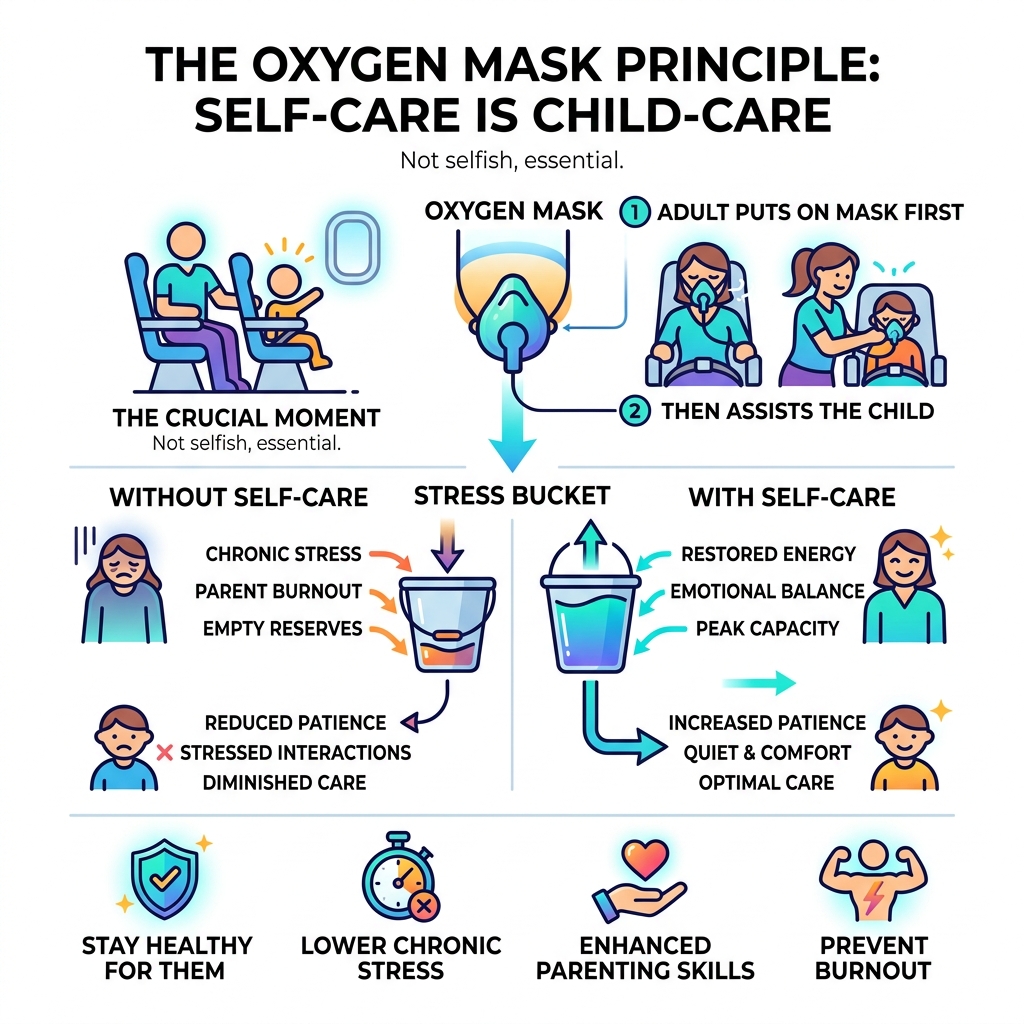
Why Self-Care for Single Parents is a Survival Necessity
When we talk about self-care for single parents, we aren’t talking about expensive spa days or weekend retreats that require a week of childcare we don’t have. We are talking about biological survival.
Scientific research, such as studies from the American Heart Association, shows that chronic stress isn’t just a feeling; it’s a physical state that raises our blood pressure and puts a massive strain on our hearts. For a single parent, staying healthy is a job requirement. If we go down, the whole ship goes down. Practicing self-care helps lower these stress markers, ensuring we have the physical stamina to keep up with a toddler or the emotional fortitude to handle a teenager’s bad day.
Beyond our own health, self-care is a gift to our children. When we prioritize our well-being, we are modeling self-love. We are teaching our kids that their needs matter, but so do ours. This sets a healthy blueprint for their own future relationships and emotional development.
There’s also a beautiful biological hack we can use: oxytocin. When we take a moment to cuddle our children or even a pet, our bodies release this “love hormone.” It provides immune benefits and natural stress relief. By slowing down to enjoy these moments, we aren’t just “playing”; we are healing. For more foundational tips on navigating this journey, check out our advice for single parents.
10 Realistic Strategies for Busy Solo Parents
We know the typical advice feels like “bubble bath BS.” You don’t have an hour to soak while someone else watches the kids. Instead, we need to focus on “micro-moments”—tiny pockets of peace that fit into a schedule that’s already bursting at the seams.
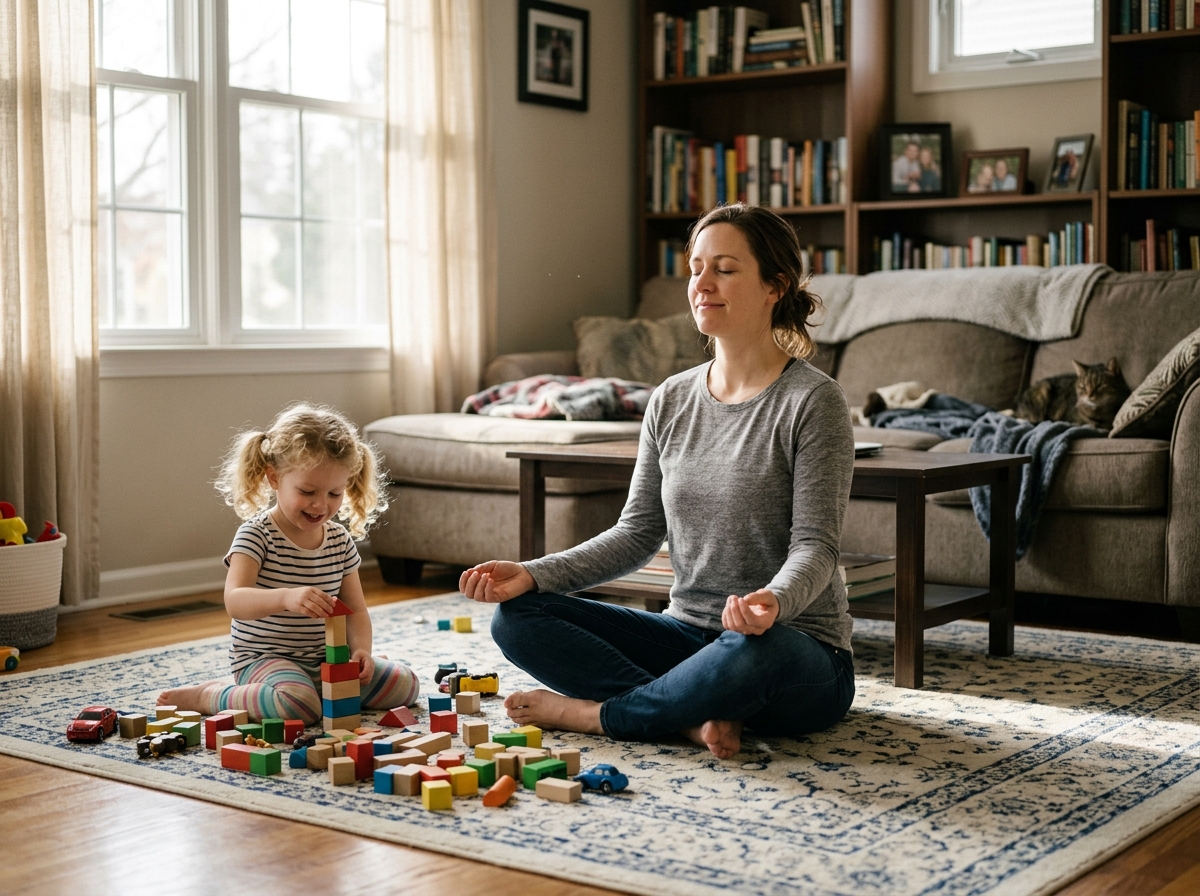
- The 5-Minute Coffee Ritual: Instead of gulping your coffee while chasing a toddler, train your children to respect “Mommy’s/Daddy’s quiet minutes.” Savor the warmth and the taste for five minutes before the chaos begins.
- Hydration as a Habit: Aim for 8–12 cups of water daily. Use a motivating water bottle to track it. Dehydration leads to fatigue and irritability—two things a solo parent can’t afford.
- Nature Grounding: Step outside for three minutes after the kids are in bed. Look at the stars, breathe the fresh air, or stand barefoot in the grass. It’s an instant nervous system reset.
- “Future You” Prep: Spend 10 minutes at night chopping veggies or setting out clothes. You are literally gifting your future self a less stressful morning.
- Intentional Chores: Turn the shower or the dishes into a mindfulness exercise. Focus on the scent of the soap and the warmth of the water rather than the to-do list in your head.
- The Commute Concert: If you drive to work alone, blast your favorite music. This is your time. Sing at the top of your lungs.
- Micro-Decluttering: Spend just 15 minutes clearing one surface. A clear space leads to a clearer mind.
- Digital Boundaries: Unfollow accounts that make you feel “less than” and join groups that offer real support.
- The “Power of No”: Say no to that extra volunteer bake sale. Your energy is a finite resource.
- Creative Movement: Dance with your kids or do squats while you’re waiting for the microwave.
For more ways to simplify your life, explore these parenting hacks for busy moms.
TABLE: Survival Mode vs. Thriving Mode Self-Care
| Feature | Survival Mode | Thriving Mode |
|---|---|---|
| Perspective | Self-care is a luxury I can’t afford. | Self-care is a non-negotiable duty. |
| Scheduling | Waiting for a “break” that never comes. | Scheduling 5-minute micro-moments. |
| Mindset | Feeling guilty for sitting down. | Understanding that rest is productive. |
| Household | Trying to do everything perfectly. | Prioritizing “sanitary” over “spotless.” |
| Support | Refusing help to prove strength. | Building a network and trading duties. |
Quick Physical Self-Care for Single Parents
Physical health is the engine of solo parenting. If you’re struggling to find a balance, our guide on how to balance work and parenting offers deeper insights.
- Movement: You don’t need a gym membership. A 15-minute walk around the block or a quick yoga video on YouTube during nap time can boost your mood and energy levels significantly.
- Sleep Science: Aim for 7–9 hours. If you’re sleep-deprived, learn the art of the nap. A 20–30 minute “power nap” prevents you from entering deep sleep (avoiding that groggy feeling), while a 90-minute nap allows for a full REM cycle.
- Breathing: Practice the 4-4-4 technique: Inhale for 4 seconds, hold for 4, exhale for 4. It’s a literal “off switch” for the fight-or-flight response.
Low-Cost Emotional Self-Care for Single Parents
Emotional exhaustion is often harder to fix than physical tiredness. Especially when raising toddlers, the emotional demands are constant.
- Journaling: You don’t need a fancy diary. Just jot down three things you’re grateful for and three feelings you’re experiencing. Getting them out of your head and onto paper reduces their power over you.
- Positive Self-Talk: Replace “I’m failing” with “I am doing a hard thing, and I am doing my best.” Forgive yourself for the messy house or the cereal dinner.
- Sensory Showers: Use a eucalyptus spray or a favorite scented soap. Turn a basic hygiene task into a 10-minute spa experience by focusing entirely on the sensory details.
Mastering Your Schedule to Create “Me Time”
Creating time for self-care for single parents requires being a “scheduling ninja.”
Start with early bedtimes. Establishing a strict routine where kids are in bed by 8:00 or 8:30 PM isn’t just good for them; it’s essential for your sanity. That hour or two of quiet in the evening is your sacred time to recharge. If you’re working while parenting, check out how to balance work and parenting-2 for more scheduling tips.
Automation is your best friend. Use grocery pickup services or Amazon Subscribe & Save to reclaim hours of your week. Saving $5 on a box of snacks and two hours of wandering aisles is a double win for your wallet and your watch.
If you co-parent, use your custody time effectively. Instead of spending every second the kids are away catching up on laundry, schedule at least one “joy activity” just for you. Mastering your holiday co-parenting calendar can also help prevent the seasonal burnout that often hits solo parents.
Building a Support System When You Feel Alone
One of the biggest myths of single parenting is that you have to do it all alone to be “successful.” In reality, the strongest parents are those who know how to build a village.
- Childcare Co-ops: Trade duties with another single parent. You watch their kids on Friday; they watch yours on Saturday. It’s free, and the kids get a playdate while you get a break.
- Online Forums and Groups: Whether it’s a Facebook group for local solo parents or an app like Clubhouse, connecting with people who “get it” reduces the isolation that leads to burnout.
- Asking for Help: This is a skill. Be specific. Instead of saying “I’m overwhelmed,” ask a friend, “Could you watch the kids for 20 minutes so I can take a walk?”
- Community Resources: Many local organizations like the Boys & Girls Club or local churches offer after-school programs or flexible childcare. For those with younger children, our advice for parents of preschoolers covers how to find the right local support.
Frequently Asked Questions about Self-Care for Single Parents
When should I seek professional mental health support?
If you find yourself feeling constantly anxious, unable to sleep even when the kids are asleep, or feeling a sense of hopelessness that doesn’t lift, it’s time to talk to a professional. Burnout can easily slide into clinical depression. Many therapists offer sliding scale fees based on income, and there are many online counseling options designed for busy schedules.
How can I afford self-care on a single income?
Self-care doesn’t have to cost a dime. A walk in the park, a library book, or a home-made foot scrub are all free. To fund the occasional treat, consider side hustles like freelance writing or using cash-back apps. Buying in bulk and using “Subscribe & Save” options can also free up a few extra dollars in your monthly budget for a yoga class or a special coffee.
How do I overcome “mom guilt” when taking time for myself?
Shift your mindset: you aren’t taking time away from your kids; you are investing in the person who takes care of them. A rested, happy parent is a much better parent than one who is resentful and exhausted. Forgive your imperfections. Your house doesn’t need to be spotless for your children to feel loved. In fact, they’ll remember the fun dance parties way more than they’ll remember the dusty baseboards.
Conclusion
At Curta Arte, we believe that you are doing one of the most important jobs in the world. Solo parenting is a marathon, not a sprint, and you need to fuel yourself accordingly. Through the empathetic guidance of writers like Aria James, we aim to provide the tools you need to not just survive, but thrive.
Self-care for single parents isn’t about being perfect; it’s about being kind to yourself so you can continue to be the hero your children see you as. For more resources and community support, continue exploring our advice for single parents.
