
Why Consistent Discipline Is So Hard When You’re Parenting Alone
Tips for solo parenting discipline can make the difference between feeling completely overwhelmed and actually feeling in control. Here’s a quick overview of what works:
Quick tips for solo parenting discipline:
- Set 3-5 simple house rules and review them regularly
- Follow through every time — empty threats destroy consistency fast
- Use routines (bedtime, mealtimes, chores) to reduce daily battles
- Praise good behavior specifically — not just “good job,” but why it was good
- Stay calm — a lower, firm voice works better than yelling
- Use natural consequences so you’re not always the villain
- Take care of yourself — burnout leads to reactive, inconsistent parenting
- Ask for help when you’re stretched thin — a neighbor, friend, or support group counts
You’re doing the job of two people. Every rule, every consequence, every tough conversation — it all lands on you. There’s no one to tag in when you’re exhausted, no co-parent to back you up in the moment, and no break when the day has already taken everything you had.
That’s the reality of solo parenting discipline.
One experienced single mother described it perfectly after suddenly becoming the sole parent to seven children: just when she thought she had parenting figured out, the rhythm she’d built with a partner was gone overnight. Every discipline decision became hers alone.
The good news? Consistency and structure — not perfection — are what actually shape children’s behavior. And both are completely within reach, even when you’re the only adult in the room.
This guide walks you through practical, proven strategies to discipline with confidence, calm, and follow-through — without burning out.

The Core Challenges of Enforcing Rules Alone
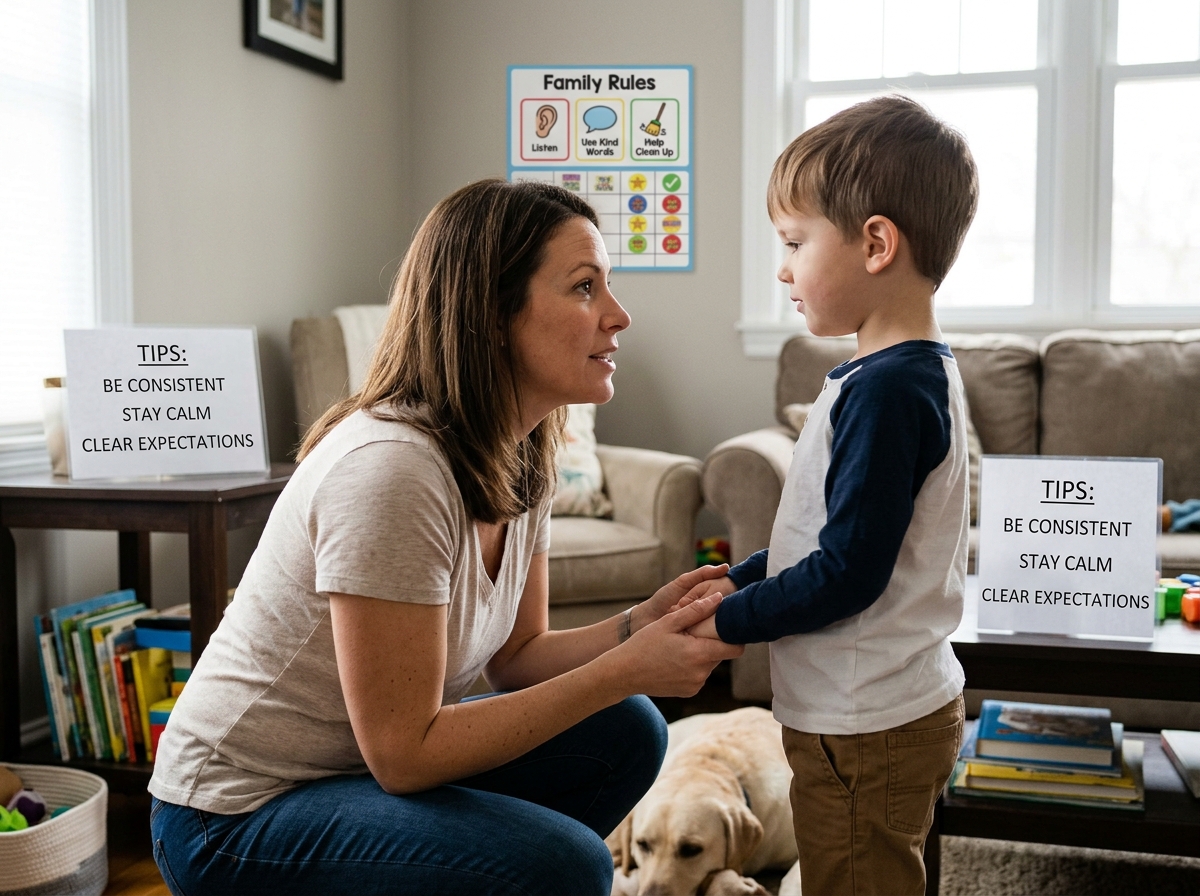
Enforcing rules as a solo parent is a marathon run at a sprinter’s pace. We don’t have the luxury of saying, “Wait until your father/mother gets home,” or “Can you take over? I’m about to lose it.” This isolation creates specific hurdles that can trip up even the most dedicated parent.
Exhaustion and “Bad Cop” Syndrome
When you are the only one providing the meals, the rides, and the emotional support, being the one who also hands out the consequences feels heavy. Many of us fall into the “bad cop” trap—feeling like our only interaction with our kids is corrective. This leads to “armchair parenting,” where we bark orders from the couch because we are simply too tired to get up and intervene.
Decision Fatigue
Every single choice—from whether they can have a second snack to how to handle a missed homework assignment—rests on your shoulders. According to National research on child safety and bullying, children thrive on stability, but decision fatigue often leads us to say “yes” just to stop the noise, which inadvertently rewards the very behavior we want to discourage.
Boundary Testing and Abandonment Fears
In single-parent homes, especially after a divorce or loss, children may test boundaries more aggressively. Research suggests this isn’t always defiance; sometimes, it’s a subconscious check to see if the remaining parent will also leave. They push the limits to ensure your love and presence are unconditional. Understanding this “loyalty test” helps us respond with firm boundaries rather than personal offense.
Essential Tips for Solo Parenting Discipline and Consistency
To find more advice for single parents, we must first look at the foundation of our authority: predictability. If a child knows exactly what will happen when a rule is broken, they are less likely to push.
The Power of Follow-Through
The golden rule of tips for solo parenting discipline is simple: Say what you mean and do what you say. If you promise a trip to the park for a clean room, you must go. If you warn that the tablet will be taken away for hitting, it must be taken away immediately. Empty threats are the fastest way to lose authority. If you’re too tired to enforce a consequence, don’t threaten it.
The “Asked and Answered” Technique
When children nag or repeat the same request hoping for a different result, use the “asked and answered” method.
- Child: “Can I have a cookie?”
- You: “No, it’s too close to dinner.”
- Child: “But I’m hungry! Please?”
- You: “Have I answered that question?”
- Child: “Yes…”
- You: “And did my answer change?” This shuts down the negotiation without a power struggle.
Visual Aids and Written Agreements
For younger kids, sticker charts provide a tangible sense of progress. For older children and teens, written agreements are vital. When rules and consequences are in writing, there is no “I didn’t know” or “That’s not fair.” You are simply following the contract you both signed. For more on this, check out our guide on effective discipline techniques for kids 2.
Establishing Clear House Rules and Routines
Structure is the solo parent’s best friend. When there is a routine, the routine becomes the “boss,” not you.
- Bedtime Routines: A strict 7:30 or 8:00 PM bedtime isn’t just for the kids; it’s for your sanity. Research shows kids with consistent sleep schedules exhibit fewer behavioral issues.
- Chore Charts: Involve them in the “team.” Use tips for teaching kids responsibility to show them that a household runs on everyone’s contribution.
- Mealtime Rules: Establishing that “leaving the table means you are finished eating” prevents the grazing and bedtime hunger strikes that often lead to late-night friction.
Communicating Expectations: Tips for Solo Parenting Discipline Success
Effective communication is about more than just giving orders; it’s about effective communication with kids that builds a bridge of trust.
- Use a “Low and Slow” Voice: Yelling actually triggers a “flight or fight” response in children’s brains, making them less likely to learn. A lower, firm tone conveys more authority.
- Specific Praise: Instead of “Good job,” try “I noticed how you shared your truck with your brother without me asking. That was very kind.”
- The “Safekeeper” Concept: Reframe your role. “My job is to keep you safe. Your job is to help keep it that way.” When they fight, ask, “Is what you are doing helping me keep you safe?”
Age-Specific Techniques: From Toddlers to Teens
Discipline must evolve as your child grows. What works for a three-year-old will backfire with a thirteen-year-old.
Toddlers: Redirection and the 1-Minute Rule
Toddlers are often driven by curiosity rather than malice. If they are pushing buttons on your laptop, redirect them to a toy with buttons. If a tantrum occurs, use a time-out: the standard rule is one minute per year of age.
Note on Health: While managing behavior, physical health impacts mood. With childhood obesity tripling in the last 30 years, ensuring they have active play and nutritious snacks can actually reduce irritability and defiance.
School-Age: Natural and Logical Consequences
This is the age to improve child behavior at home by letting the world be the teacher.
- Natural Consequences: If they forget their coat, they get cold. (As long as it’s safe, let them feel the result of their choice).
- Logical Consequences: If they break a toy, the toy is gone. If they spill juice, they help clean it up.
Managing Teen Boundaries: Advanced Tips for Solo Parenting Discipline
The teenage brain is undergoing a massive rewrite. The prefrontal cortex—the area responsible for logic and impulse control—is still under construction.
- Social Media Influence: Teens today face intense pressure to conform to online trends. Acknowledge this pressure while maintaining your house rules on screen time and privacy.
- The Privilege Ladder: Help them understand that freedoms (like a later curfew) are earned through demonstrated responsibility.
- Negotiation: Involve them in the process. Ask, “What do you think is a fair consequence for missing curfew?” They are more likely to follow a rule they helped create. For more deep dives, see effective discipline techniques for kids.
Handling Co-Parenting Friction and Rule Discrepancies
One of the hardest parts of tips for solo parenting discipline is when the other parent has a completely different set of rules. “But Dad lets us stay up until midnight!” is a classic refrain.
- Your House, Your Rules: Do not try to compete or “spoil” them to win favor. Simply state, “I understand the rules are different at Dad’s house. In this house, bedtime is 8:30.”
- Avoid the Blame Game: Never badmouth the other parent to the child or the school. If a teacher calls about missed homework at the other parent’s house, focus on the child’s responsibility to manage their bag, rather than the other parent’s failure to check it.
- Parallel Parenting: If co-parenting is high-conflict, focus on being the “rock” in your own home. Children are remarkably adaptable and will eventually learn to respect the boundaries of whichever environment they are in.
The Role of Self-Care in Maintaining Authority
You cannot pour from an empty cup. If you are constantly on edge, your discipline will be reactive (yelling, overreacting) rather than proactive (calmly enforcing a pre-set consequence).
Reactive vs. Proactive Discipline
| Feature | Reactive Discipline (Burned Out) | Proactive Discipline (Regulated) |
|---|---|---|
| Trigger | Child’s behavior annoys the parent | A pre-set rule is broken |
| Tone | Yelling, sarcasm, or pleading | Firm, calm, and neutral |
| Action | Sudden, harsh punishment | Logical, pre-discussed consequence |
| Result | Child feels fear or resentment | Child learns responsibility |
Building Your Support Network
Solo parenting doesn’t mean you have to do it in a vacuum. Find a mentor, join a single parent support group, or simply have a friend you can call when you’re “totally done.” Sometimes, just 15 minutes of “me-time”—even if it’s just listening to a favorite song in the car—can reset your emotional state.
At Curta Arte, we believe that self-forgiveness is a vital part of the process. You will lose your cool. You will give in to the cookie request once in a while. When that happens, apologize to your child (modeling great behavior!) and start fresh the next day.
Frequently Asked Questions about Solo Discipline
How do I avoid being the “bad cop” all the time?
Balance is key. Make sure you are spending “non-discipline” time with your kids every day. Whether it’s a tickle war, reading a story, or a 5-minute “check-in” about their day, building relationship capital makes the moments of discipline easier for them to swallow.
What should I do when I’m too exhausted to follow through?
If you are too tired to enforce a consequence, don’t issue a new one. Fall back on your established routines. If the kids are acting out and you’re at a breaking point, it’s okay to declare a “quiet time” where everyone (including you) goes to their own space for 20 minutes to reset.
How do I handle a child who says “the other parent lets me do it”?
Acknowledge their feeling without changing your boundary. “It sounds like you really enjoy having that freedom at [Parent’s] house. I hear you. However, in this house, we do things differently to keep our routine healthy.”
Conclusion
Mastering tips for solo parenting discipline isn’t about being a drill sergeant; it’s about being a leader. By providing a consistent, predictable environment, you are giving your children the greatest gift possible: a sense of security.
The long-term benefits of consistent solo discipline are profound. Your children will grow up understanding boundaries, respecting authority, and, most importantly, knowing they can rely on you to be their “Safekeeper.” You are building a relationship based on trust and respect that will last long after the toddler tantrums and teen rebellions have faded.
For more resources on navigating these waters, explore our advice for single parents. You’ve got this—one rule, one routine, and one calm breath at a time.
