
When Your Family’s Future Feels Like It’s on the Line
Divorce custody battle advice is something no parent ever expects to need — until the day they do.
Here is a quick overview of the most important steps to take:
- Hire an experienced family law attorney as early as possible
- Document everything — parenting time, communications, school and medical involvement
- Focus on the child’s best interests, not on “winning” against your ex
- Keep all communication civil and in writing (texts, emails, co-parenting apps)
- Avoid social media posts about your case, your ex, or your emotions
- Attend all school events, medical appointments, and extracurriculars consistently
- Consider mediation before going to trial — most cases settle without a judge’s ruling
- Never violate a court order, even if you disagree with it
- Respond to false allegations with evidence, not emotion
- Shield your child from adult conflict at every stage
Few experiences hit harder than realizing your time with your child might be decided by a courtroom.
A custody battle doesn’t just test your legal case. It tests your patience, your parenting, and your emotional limits — often all at the same time. Research consistently shows that children caught in high-conflict custody disputes pay a real price, from slipping grades to behavioral changes, no matter how loving either parent is.
The good news? Most custody cases — around 90% — never reach a judge’s final ruling. How you show up, communicate, and document your role as a parent matters far more than most people realize.
This guide gives you a clear, honest roadmap through the process — from understanding what courts actually look for, to protecting yourself against false accusations, to staying sane while putting your child first.
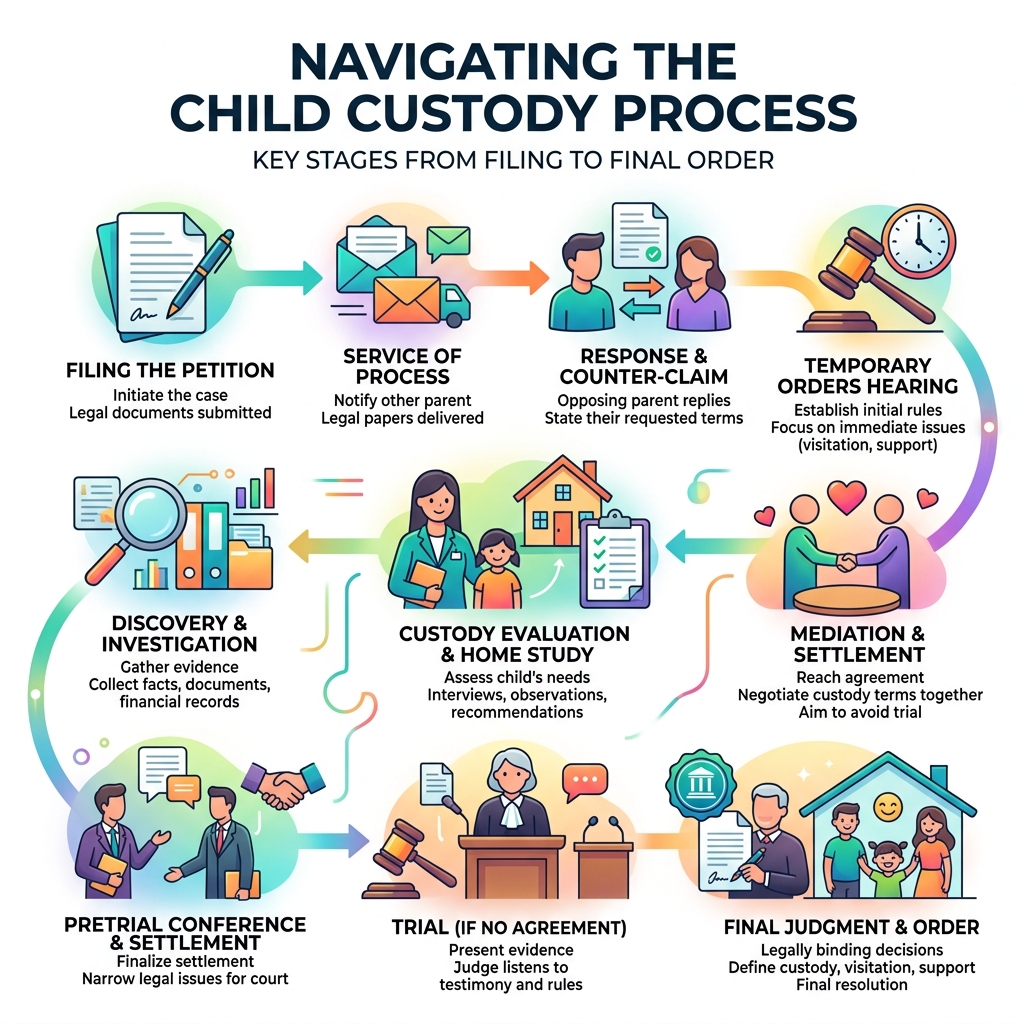
Understanding the “Best Interests of the Child” Standard
When we enter a courtroom, the most important phrase we will hear is “the best interests of the child.” While it sounds subjective, judges across the country use specific benchmarks to define it. At its core, this standard ensures that the child’s physical, emotional, and psychological safety remains the primary consideration in any ruling.

Courts look at several key factors when weighing these interests:
- Physical Safety and Health: Is the environment free from abuse, neglect, or substance use?
- Emotional Ties: The strength of the bond between the child and each parent.
- Home Stability: Which parent can provide a consistent routine, a permanent space for the child, and proximity to their school and community?
- Parental Cooperation: The court heavily favors the parent who encourages a relationship with the other parent.
- Educational and Developmental Needs: Who is staying on top of the child’s grades, medical appointments, and extracurricular interests?
In states like Texas, the law often begins with a presumption of Joint Managing Conservatorship, meaning both parents should share in major decision-making. However, as noted in this strategic guide for parents, “winning” isn’t about defeating the other parent; it’s about methodically proving your stability and involvement. For those of us navigating life as a solo caregiver, finding specific advice for single parents can help bridge the gap between legal requirements and daily reality.
Essential Divorce Custody Battle Advice: Building Your Case
Building a case is less about dramatic courtroom speeches and more about the quiet, daily work of parenting. If it isn’t documented, in the eyes of the court, it might as well not have happened.
The most powerful tool in your arsenal is a parenting journal. This should be a factual, dated log of your involvement. Avoid emotional venting; instead, focus on:
- Pick-up and drop-off times (noting any lateness by the other parent).
- Summaries of parent-teacher conferences.
- Dates of medical or dental appointments you attended.
- Milestones, such as a lost tooth or a successful sports game.
Evidence gathering also involves collecting third-party records. This includes school report cards, medical records, and even letters from coaches or teachers who can verify your presence. If you are preparing for a case in New York, for example, you’ll find that New York courts apply a broad “totality of circumstances” test. They want to see who has historically provided the day-to-day care. Balancing these legal requirements while managing a career is tough, so learning how to balance work and parenting is essential for maintaining the stability the court craves.
Proving Consistent Involvement in Your Child’s Life
To show the court you are the primary or a highly involved caregiver, you must demonstrate a “consistent presence.” This goes beyond just “showing up.” It means knowing the name of your child’s pediatrician, their teacher, and their best friend.
We recommend being the parent who:
- Handles the “Boring” Stuff: Help with homework, manage the bedtime routine, and ensure chores are completed.
- Attends the Events: Be at the dance recitals, the soccer games, and the school plays.
- Maintains the Routine: Courts love stability. If your child has a 7:30 PM bedtime at your house, keep it consistent.
Why Legal Representation Matters for Divorce Custody Battle Advice
While you can technically represent yourself, child custody laws are incredibly complex. In Texas, for instance, less than 1% of all attorneys are Board Certified in Family Law. Furthermore, only 5% are named to Texas Super Lawyers, and a mere 2.5% of those under 40 make the “Rising Stars” list.
Hiring an experienced attorney is crucial because they understand the rules of evidence. They know how to present your documentation so it’s actually admissible in court. They also help you navigate local statutes and maintain a professional courtroom demeanor, preventing emotional outbursts that could damage your credibility.
Communication Strategies and Co-Parenting Dynamics
The way you talk to your ex-partner can make or break your case. Judges look for “parental fitness,” and a large part of that is your ability to foster a relationship between the child and the other parent.
| Feature | Co-Parenting | Parallel Parenting |
|---|---|---|
| Communication | Frequent, flexible, and collaborative | Minimal, formal, and usually in writing |
| Conflict Level | Low to Moderate | High |
| Decision Making | Shared and discussed | Individual during respective times |
| Best For | Parents who can remain civil | High-conflict cases or history of abuse |
We always suggest keeping all communication clean, concise, and child-focused. Use co-parenting apps like OurFamilyWizard or TalkingParents, which create a court-admissible record of every exchange. If the holidays are approaching and tensions are high, mastering your holiday co-parenting calendar early can prevent last-minute blowups. Even if the other parent is being difficult, your goal is to remain the “reasonable” one. For more tips on maintaining this balance, check out our guide on how to balance work and parenting.
Mediation and Alternative Dispute Resolution
Most jurisdictions prefer that parents settle their differences outside of the courtroom. Many courts actually mandate mediation before a trial date is set. Mediation involves a neutral third party who helps both sides reach a compromise.
Why choose mediation?
- It’s Child-Centered: It reduces the trauma children experience when parents go to “war.”
- It’s Cost-Effective: Litigation is expensive; mediation is a fraction of the cost.
- You Maintain Control: In court, a judge who doesn’t know your family makes the rules. In mediation, you decide.
However, mediation is inappropriate in cases involving coercive control, domestic violence, or significant power imbalances.
What to Avoid: Common Pitfalls That Damage Credibility
In a custody battle, you are under a microscope. Seemingly small mistakes can have a massive impact on the judge’s perception of your character.
Avoid these common mistakes:
- Social Media Venting: Never post about your ex, your lawyer, or the case. Opposing counsel will find it.
- Substance Abuse: Avoid alcohol or recreational drugs entirely during the litigation.
- Disparaging the Other Parent: Speaking poorly of the other parent in front of the child is viewed as “parental alienation” and is a quick way to lose favor with a judge.
- Violating Temporary Orders: Even if you think a temporary schedule is unfair, follow it to the letter until it is legally changed.
- Introducing New Partners: Bringing a new boyfriend or girlfriend into the child’s life during a battle is often seen as confusing for the child and a sign of poor judgment.
Managing High-Conflict Situations and Divorce Custody Battle Advice
If you are dealing with an ex who uses coercive control or financial abuse, the strategy changes. You must prioritize safety. This includes conducting safety assessments and potentially requesting professional supervision for visits.
In high-conflict scenarios, “parallel parenting” is often the safest route. You limit contact to written updates and use neutral, public exchange points (like a police station lobby or a busy grocery store) to ensure there are no verbal altercations in front of the children.
Navigating High-Conflict Scenarios and False Allegations
False allegations are a terrifying but common tactic in “nasty” custody battles. Whether it’s accusations of neglect, substance abuse, or worse, your response must be tactical, not emotional.
If you face false claims:
- Stay Calm: An angry reaction often makes you look like the aggressor the other parent claims you are.
- Gather Objective Evidence: If you are accused of being late, show your GPS logs or timestamped texts. If accused of neglect, provide school attendance records.
- Witness Credibility: Use testimony from neutral third parties like teachers, neighbors, or doctors who see you with your child regularly.
- Request Evaluations: If substance abuse is alleged, offer to take a drug test immediately. This shows you have nothing to hide.
Judges are trained to look for patterns of coercive control. If one parent is using the legal system to harass the other (litigation abuse), a skilled attorney can point this out to the court.
Frequently Asked Questions about Child Custody
Do courts automatically favor mothers over fathers in custody battles?
No. This is one of the most persistent myths in family law. Modern courts operate on a gender-neutral basis. In Texas, for example, the law explicitly gives fathers equal rights to physical and legal custody. The court cares about who provides the most stability and who has historically been the “nurturing” parent, regardless of gender.
How should I respond to false allegations made during the case?
As mentioned, the best response is a factual one. Do not engage in a “he-said, she-said” battle. Provide the court with timestamped logs, witness statements, and objective records. Let your attorney handle the rebuttals while you continue to focus on being a consistent, loving parent.
Can my child choose which parent they want to live with?
In many states, including Texas, a child who is 12 or older can speak with a judge in chambers to express a preference. However, the child does not get to make the final decision. The judge will consider the child’s maturity level and whether they are being influenced or “coached” by a parent. The “best interests” standard always overrules a child’s preference.
Conclusion
At Curta Arte, we know that a custody battle feels like a marathon you never trained for. It is exhausting, emotional, and at times, truly scary. But by focusing on the “best interests” of your child, keeping meticulous records, and staying out of the “emotional minefield” of social media and petty arguments, you can build a future of stability.
Our writer, Aria James, and the rest of our team are dedicated to providing the empathetic guidance you need to navigate these hurdles. The goal isn’t just to “win” a court case; it’s to ensure your child comes out of this transition feeling safe, loved, and supported.
For more parenting tips and resources, stay connected with our community. You don’t have to walk this path alone.
