
Make Easter Morning Unforgettable With an Indoor Easter Scavenger Hunt
An indoor easter scavenger hunt is one of the easiest ways to turn a regular Easter morning into a memory your kids will talk about for years — no backyard, no perfect weather, and no co-parent required.
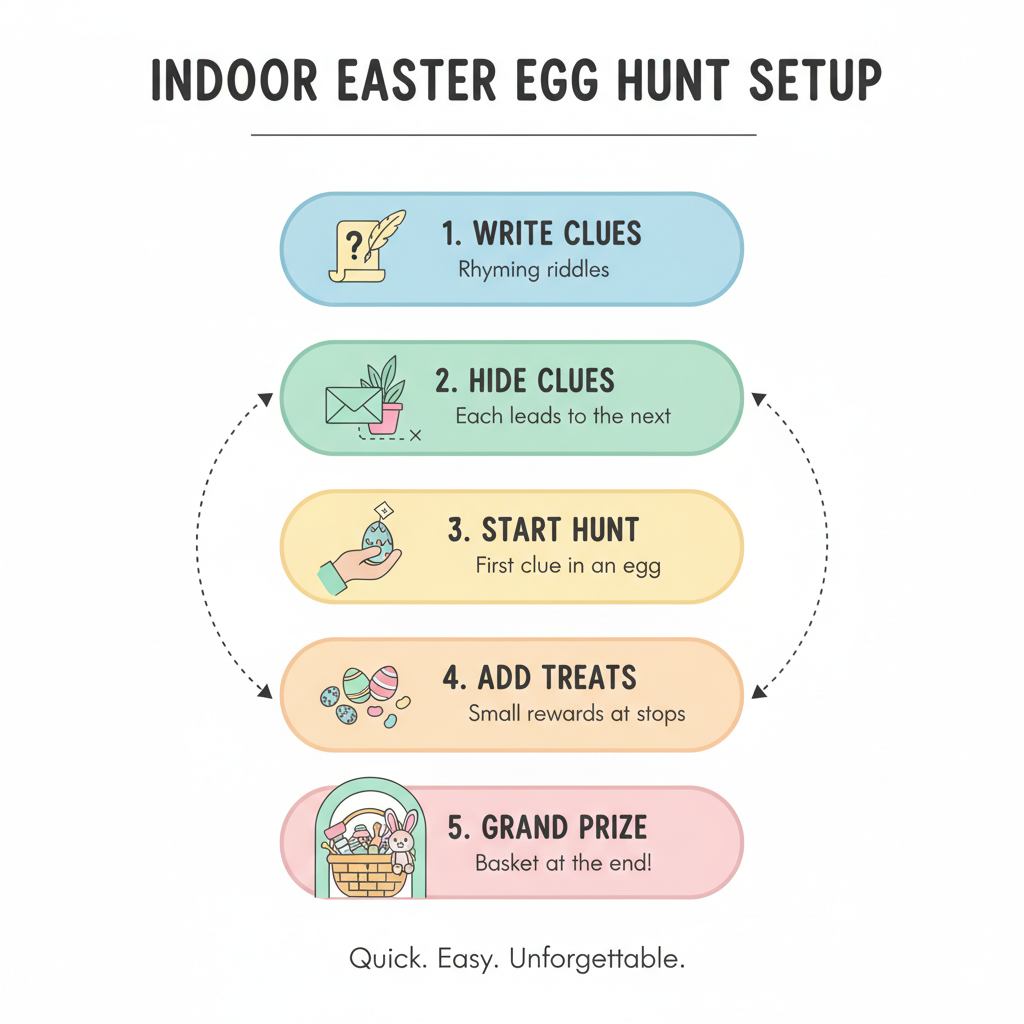
Here’s the quick version of how it works:
- Print or write out clues — rhyming riddles work great for most ages
- Hide each clue at the location mentioned in the previous one
- Start kids with the first clue — hand it to them or tuck it in an egg
- Add small treats or candy at each stop to keep motivation high
- End with the big prize — an Easter basket hidden somewhere fun
That’s it. Twenty minutes of setup the night before, and you’ve got an activity that keeps kids entertained all morning.
Whether your kids are toddlers just learning to follow directions or teens who’ve long outgrown traditional egg hunts, this format works. You control the difficulty, the hiding spots, and the prizes — all from inside your own home.
Rainy Easter? No problem. Small apartment? Still works. Doing it all solo? Absolutely manageable.
This guide walks you through everything — clues, hiding spots, age adaptations, free printables, and prizes — so you can pull it off without stress.
Why an Indoor Easter Scavenger Hunt is Perfect for Families

For many of us, especially those navigating solo parenting, the pressure to create “magical” holiday moments can feel overwhelming. We often think we need a sprawling lawn or a community event to make Easter special. However, an indoor easter scavenger hunt is actually superior for several reasons.
First, it is entirely weather-proof. Spring weather is notoriously unpredictable. Whether it’s a sudden downpour or a lingering winter chill, moving the hunt inside ensures the fun isn’t canceled. You won’t have to worry about soggy cardboard baskets or muddy shoes.
Second, it provides a safe, controlled environment. If you are managing multiple children on your own, keeping everyone within the walls of your home makes supervision a breeze. It’s also incredibly easy-indoor-scavenger-hunts-for-kids to set up in a small apartment or a large house alike.
Furthermore, scavenger hunts promote inclusive play. Unlike a traditional “scramble” where the fastest child gets all the eggs, a clue-based hunt allows siblings to work together or follow their own personalized paths. This reduces the risk of holiday meltdowns and ensures every child feels successful. It’s about the journey and the “aha!” moment of solving a riddle, rather than just the volume of candy collected.
How to Set Up Your Indoor Easter Scavenger Hunt Step-by-Step
Setting up an indoor easter scavenger hunt is surprisingly simple once you understand the logic of “sequential hiding.” You aren’t just scattering eggs; you are building a trail.
- Select Your Clues: Choose about 8 to 12 clues based on your home’s layout. Common spots include the fridge, the washing machine, a bathtub, or a shoe closet.
- Work Backward (The Secret Pro Tip): Start by hiding the final prize (the Easter basket). Then, take the clue that leads to that prize and hide it in the second-to-last location. Continue this until you reach the first clue. This ensures you don’t accidentally leave a gap in the trail.
- Number Your Envelopes or Eggs: To keep yourself organized, number the outside of the envelopes or plastic eggs. This way, if a child finds “Clue #5” while looking for “Clue #2,” they know to leave it alone and keep searching.
- Prepare the Starting Point: On Easter morning, hand the first clue to your children or leave it in a prominent spot, like the kitchen table or taped to their bedroom door.
For more inspiration on keeping the momentum going, check out our guide on fun-indoor-activities-for-kids-on-a-rainy-day.
Making Your indoor easter scavenger hunt More Challenging
If you have older children or “energetic” kids who solve puzzles in thirty seconds flat, you’ll need to level up. Instead of simple rhymes, consider using:
- Ciphers: Write the clue in a simple code (A=1, B=2) that they have to decrypt.
- Jigsaw Clues: Cut the clue into pieces. They have to find all the pieces at one station and assemble them to read the next location.
- Obscure Hiding Spots: Instead of “under the pillow,” try “inside the pillowcase” or taped to the underside of a chair.
- Activity Challenges: To get the next clue, they might have to do 10 jumping jacks or sing a verse of a song. This is perfect for fun-indoor-activities-for-energetic-kids.
Free Printables for Your indoor easter scavenger hunt
You don’t have to be a poet to create a great hunt. Many wonderful resources offer free printable clues that you can simply cut and hide. These often feature cute bunny designs and pre-written rhymes for common household items.
- Free Printable Easter Scavenger Hunt – Brooklyn Berry Designs
- Indoor Easter Scavenger Hunt Clues for Kids
- Easter Scavenger Hunt with Free Printable Clues | Find the Easter Basket!
- Printable Easter Bunny Scavenger Hunt Clues –
- Free Printable Easter Scavenger Hunt
- Indoor Easter Egg Hunt Clues (Free Printable)
Creative indoor easter scavenger hunt Clues and Riddles
The best clues are the ones that lead to places every home has. This makes the hunt accessible whether you live in a studio or a three-story house. Here are some classic rhyming ideas to get you started:
- The Fridge: “I’m cold and white and hold the milk, my light comes on when you peek. Look inside my chilly door for the treasure that you seek!”
- The Bathtub: “You come here to get scrub-a-dub clean, with bubbles and toys and soap in between.”
- The Washing Machine: “I spin around and make a loud sound, keeping your clothes from touching the ground.”
- The Shoe Closet: “I’m where you put your stinky feet before you go outside. Look among the sneakers for where the bunny likes to hide!”
- The Television: “I have a screen but I am not a phone, I show you movies while you’re at home.”
Common Indoor Hiding Spots List:
- Under the dining room table
- Inside a clean cereal box in the pantry
- Taped behind a bathroom mirror
- Tucked inside a favorite storybook
- Hidden in the laundry hamper (a favorite for stay-at-home-fun-exciting-activities-for-kids)
- Inside a coffee mug
Adapting the Hunt for Toddlers, Kids, and Teens
A challenge for parents—especially single parents—is managing different age groups simultaneously. You want the toddler to feel included, but you don’t want the 12-year-old to be bored. The key is customization.
For Toddlers (Ages 2-4): Skip the riddles. Use picture clues instead. If the next egg is under the couch, show them a printed photo of the couch. You can also use “Bunny Footprints” (cut out of paper or made with flour/baby powder) to lead them directly from one spot to the next.
For Elementary Kids (Ages 5-10): Rhyming riddles are the “sweet spot” for this age. They are old enough to solve the puns but young enough to find the magic in the “Easter Bunny” leaving notes. This is a great weekend-fun-simple-activities-for-kids staple.
For Teens (Ages 11+): Teens love a challenge and, let’s be honest, they usually want the prize at the end (often cash or a gift card!). Make them work for it. Use logic puzzles, “fill in the blank” clues, or even digital clues sent to their phones.
| Age Group | Clue Type | Hiding Difficulty | Goal |
|---|---|---|---|
| Toddlers | Pictures / Colors | In plain sight | Sensory discovery |
| Kids | Rhymes / Riddles | Partially hidden | Problem solving |
| Teens | Ciphers / Logic | Very well hidden | Intellectual challenge |
Best Prizes and Easter Basket Fillers for Indoor Hunts
While the final prize is usually the Easter basket, we recommend placing a small “motivator” at each stop of the indoor easter scavenger hunt. This keeps the energy high and prevents frustration if a clue is particularly tricky.
- Edible Treats: Traditional jelly beans, chocolate eggs, or even healthy snacks like “bunny carrots” (baby carrots in a cute bag).
- Activity Fillers: Lego minifigures are perfect because you can put one piece or one figure at each stop. By the end, they have a full set to build!
- Craft Supplies: Markers, stickers, or fun washi tape for the creative child.
- Experience Vouchers: For older kids, include “coupons” they can redeem later, such as “One Late Bedtime,” “Pick the Movie for Movie Night,” or “Get Out of Drying Dishes Free.”
- The Grand Finale: The final basket can be hidden in the most unexpected place—the microwave (turned off, of course!), the trunk of the car, or even inside the bathtub behind the curtain.
Explore more ideas in our category/fun-activities-for-kids section!
Frequently Asked Questions about Indoor Easter Scavenger Hunts
What age groups is an indoor Easter scavenger hunt best suited for?
While it is most popular for kids aged 4 to 12, it can be adapted for anyone. Toddlers can participate with picture clues and parental guidance, while teens and even adults can enjoy a hunt if the riddles are sufficiently difficult and the prizes are age-appropriate (like gift cards or favorite tech gadgets).
How do you make an indoor Easter scavenger hunt more fun for teens?
To keep teens engaged, increase the stakes and the difficulty. Use “meta-clues” where they have to find three different pieces of paper to reveal one location. You can also incorporate technology, like QR codes that lead to a YouTube video or a specific song on Spotify that gives them a hint. Most importantly, ensure the final “treasure” is something they actually value!
What are common mistakes to avoid when planning an indoor hunt?
- Making clues too hard: If kids get stuck, they lose interest. Always have a “hint” ready.
- Forgetting the order: Always do a “dry run” walk-through yourself to make sure Clue A leads to Clue B correctly.
- Ignoring the pets: If you’re hiding chocolate, make sure it’s in a place your dog or cat can’t reach!
- Not taking photos: These hunts move fast! Have your camera ready to catch the excitement as they solve each riddle.
Conclusion
At Curta Arte, we know that holidays as a single parent can sometimes feel like a marathon. But activities like an indoor easter scavenger hunt remind us that creating magic doesn’t require a huge budget or a team of people—it just takes a little bit of heart and a few clever rhymes.
As Aria James often shares, the most meaningful traditions are the ones that prioritize connection over perfection. Whether you use pre-printed clues or scribble them on the back of junk mail envelopes, your kids will remember the excitement of the search and the time spent together.
For More fun activities for kids, stay tuned to our blog for empathetic guidance and practical tips for every season of parenting. Happy hunting!
