
The Real Financial Pressure Facing Single Mums Today
Financial help single mum resources exist across dozens of government programs, nonprofits, and community organizations — and knowing where to start can make an immediate difference. Here is a quick overview of your main options:
| Type of Help | Program | What You Get |
|---|---|---|
| Cash assistance | TANF | Monthly payments for basic needs |
| Food | SNAP / WIC | Grocery benefits and nutrition support |
| Housing | Section 8 / HUD | Rent vouchers and subsidized housing |
| Utilities | LIHEAP | Help paying energy and heating bills |
| Childcare | CCAP / Head Start | Subsidized or free early childcare |
| Healthcare | Medicaid / CHIP | Free or low-cost medical coverage |
| Education | Pell Grant / FAFSA | College funding and job training |
| Emergency | United Way 211 | Local crisis support (dial 2-1-1) |
The numbers tell a stark story. There are 15.4 million single mothers in the United States raising children on their own. Around 30% of single parents live below the poverty line — compared to just 6% of two-parent households. And about 23% of all children under 18 in the U.S. live with one parent, the highest share in the world.
That is an enormous amount of pressure to carry alone.
What makes it harder is that many single mums who qualify for help never apply — either because they don’t know the programs exist, or the process feels too overwhelming to start. In fact, estimates suggest up to 20% of working low-income people who qualify for SNAP never enroll.
This guide cuts through the complexity. Whether you are in crisis right now or planning ahead, you will find clear, actionable steps to access the support you and your children are entitled to.
Financial Help Single Mum: Navigating Government Assistance Programs
When we talk about financial help single mum options, the first stop is usually the federal and state government. These programs are designed to provide a safety net, but they can feel like a maze of acronyms. Let’s break down the big ones.
Temporary Assistance for Needy Families (TANF)
TANF is the primary cash assistance program in the U.S. It provides monthly payments to help families with children when the parents cannot provide for the family’s basic needs. It isn’t just a “handout”; it often includes job preparation and work requirements.
Eligibility is strictly based on income and the number of children in your home. It is important to know that benefits vary wildly by state. For example, a family of three might receive around $204 a month in Arkansas, while in New Hampshire, that same family could receive up to $1,333. Most states have a 60-month lifetime limit for adults receiving these benefits.
Low Income Home Energy Assistance Program (LIHEAP)
If you are struggling to keep the lights on or the heat running, LIHEAP is your lifeline. This program provides federally funded assistance to help low-income households pay their energy bills. The national average benefit is usually between $500 and $600 annually. In some cases, LIHEAP can also help with “weatherization”—making your home more energy-efficient to lower your bills permanently.
State-Specific Variations
Every state manages these federal funds differently. For instance, if you are looking for advice-for-single-parents in California, you might find more generous “diversion” payments (one-time emergency cash) than in other regions.
| State | Max TANF (Family of 3) | SNAP Gross Income Limit (Family of 3) |
|---|---|---|
| New Hampshire | $1,333 | $2,887 |
| New York | $789 | $2,887 |
| Texas | $312 | $2,887 |
| Arkansas | $204 | $2,887 |
Housing and Childcare Support Systems
Securing a safe place to live and reliable care for your children are the two biggest hurdles for any solo parent. We know that without these two pillars, it is almost impossible to maintain a steady job.
HUD Vouchers and Section 8
The Department of Housing and Urban Development (HUD) offers Housing Choice Vouchers (often called Section 8). These vouchers allow you to find your own housing in the private market, and the government pays a portion of the rent directly to the landlord.
Generally, you will pay about 30% of your adjusted monthly income toward rent, and the voucher covers the rest. The downside? Waitlists are notoriously long—often 2 to 5 years in major cities. We recommend applying to multiple housing authorities, including those in smaller nearby towns, to increase your chances.
Childcare Subsidies: CCAP and Head Start
The Child Care Assistance Program (CCAP) helps low-income families pay for childcare so parents can work or attend school. Additionally, Head Start and Early Head Start are incredible federal programs that provide free, high-quality early childhood education and developmental services for children from birth to age five.
If you are a student, look into the CCAMPIS (Child Care Access Means Parents in School) program, which provides campus-based childcare for low-income parents. Balancing these responsibilities is a skill in itself, and we have shared more on how-to-balance-work-and-parenting to help you manage the mental load.
Essential Food and Nutrition Support for Single Mums
No mother should have to worry about how she will feed her children. There are several robust systems in place:
- SNAP (Supplemental Nutrition Assistance Program): Formerly known as food stamps, this provides an electronic benefits card (EBT) used to buy groceries. A family of three can receive up to $768 monthly.
- WIC (Women, Infants, and Children): This is specifically for pregnant women, new mums, and children under five. It provides specific healthy foods (like milk, eggs, and fruit) and nutrition education.
- National School Lunch Program: This ensures your kids get a healthy breakfast and lunch at school for free or at a reduced price.
- SUN Bucks (Summer EBT): A newer program that provides $120 per child for groceries during the summer months when school meals aren’t available.
Emergency Aid and Community Resources
Sometimes, government programs move too slowly for an immediate crisis. When you need help today, community organizations and nonprofits step in.
The Power of 2-1-1
If you are facing an immediate crisis—like an eviction notice or an empty pantry—dial 2-1-1 from any phone. This is the United Way’s referral service. They can connect you with local food banks, emergency shelters, and rental assistance programs in your specific zip code.
Charitable Organizations
- The Salvation Army: They offer everything from transitional housing to help with utility shut-off notices.
- Catholic Charities & St. Vincent de Paul: These organizations often have small “hardship grants” to help with one-time expenses like a car repair or a month’s rent. You do not need to be a member of their faith to receive help.
- Domestic Violence Support: If you are leaving an unsafe situation, organizations like the National Domestic Violence Hotline can connect you with specialized shelters that offer legal aid and safety planning.
For our readers in New Zealand, the Sole Parent Support – Work and Income provides a weekly payment to help you find part-time work or prepare for the future.
Health, Technology, and Transportation Assistance
Living on a budget doesn’t just mean cutting back on groceries; it means finding ways to access the tools you need for modern life.
Healthcare: Medicaid and CHIP
Medicaid provides free or low-cost health coverage to millions of Americans, including some low-income adults and children. If you earn too much for Medicaid but still can’t afford private insurance, the Children’s Health Insurance Program (CHIP) covers your kids. These programs cover doctor visits, immunizations, and even dental care in many states.
Technology and Phone Help
You can’t apply for jobs or check school schedules without a phone and internet.
- Lifeline Program: Provides a monthly discount on phone or internet service.
- SafeLink & TruConnect: These providers offer free government-issued cell phones with monthly minutes for qualifying low-income individuals.
- Computers with Causes: A nonprofit that provides refurbished computers to families in need.
Transportation Assistance
Getting to work is a major hurdle. Organizations like 1-800-Charity-Cars or Vehicles for Change provide donated cars to struggling families. Additionally, many local social service offices offer free or discounted bus passes for those receiving TANF or SNAP. We’ve compiled more parenting-hacks-for-busy-moms to help you save time and money on the daily commute.
Long-Term Financial Help Single Mum: Education and Career Grants
The best way to move from “surviving” to “thriving” is through education and career growth. We want to see you empowered and independent.
- FAFSA & Pell Grants: Always start by filling out the Free Application for Federal Student Aid (FAFSA). The Pell Grant is the gold standard because it is money for college that you do not have to pay back. For the 2024-25 year, the maximum award is $7,395.
- Specialized Scholarships: Look into the Soroptimist Live Your Dream Awards, which provide up to $16,000 for women who are the primary financial providers for their families.
- Job Training: Job Corps offers free vocational training for young adults, and Dress for Success provides professional attire and development tools to help you ace your interviews.
If you are trying to figure out the logistics of studying while parenting, check out our guide on how-to-balance-work-and-parenting-2 for practical scheduling tips.
Frequently Asked Questions about Financial Aid
How do I qualify for emergency rent assistance?
To get help with rent, you usually need to show proof of a “hardship”—this could be a medical bill, a job loss, or an eviction notice. Start by calling 2-1-1. Organizations like the Salvation Army will require your ID, proof of income (or lack thereof), and a copy of your lease. Many programs are “first-come, first-served,” so apply the moment you know you’ll be short.
Can I receive multiple types of government aid at once?
Absolutely. In fact, qualifying for one program (like TANF) often makes you “categorically eligible” for others (like SNAP or Medicaid). This is called a cross-program referral. You don’t have to choose between food and healthcare; the system is designed for you to use multiple resources to build stability.
What should I do if my application for benefits is denied?
Don’t panic. Denials happen for many reasons, often just a missing document. You have a legal right to a fair hearing. Review the denial letter carefully—it will list the deadline for an appeal (usually 60–90 days). Contact a local Legal Aid office; they often provide free help to single mothers navigating benefit disputes.
Conclusion
At Curta Arte, we believe that being a single mum is one of the toughest—and most rewarding—jobs on the planet. Writers like Aria James know that the journey to self-sufficiency isn’t always a straight line. Accessing financial help single mum resources is not a sign of failure; it is a strategic move to ensure your children have the foundation they deserve.
You are the CEO of your household. Using the tools available to you—whether it’s a Pell Grant for school or SNAP for groceries—is simply good management.
Your Immediate Next Steps:
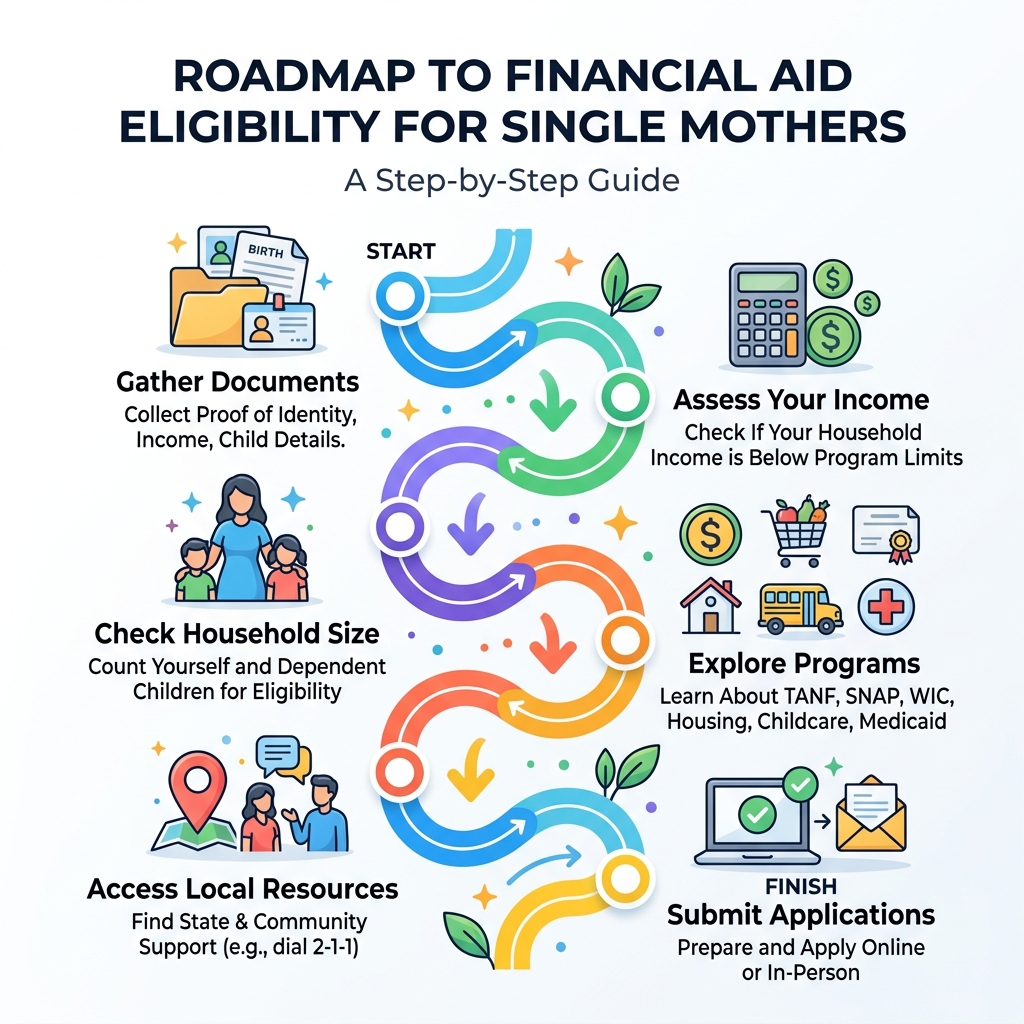
- Dial 2-1-1: Find out what local charities are active in your neighborhood today.
- Visit Benefits.gov: Use their “Benefit Finder” tool to see exactly what you qualify for based on your income.
- Gather Your Docs: Create a folder with your ID, children’s birth certificates, and proof of income so you’re ready to apply.
- Apply for SNAP/Medicaid: These are often the easiest “entry points” into the support system.
For more community support and guidance, explore our Parenting Tips section. You don’t have to walk this path alone.
