
Why Choice Solo Dad Routines Are the Foundation of Thriving Solo Fatherhood
choice solo dad routines are the daily systems single fathers use to bring structure, calm, and connection to family life — and getting them right makes everything else easier.
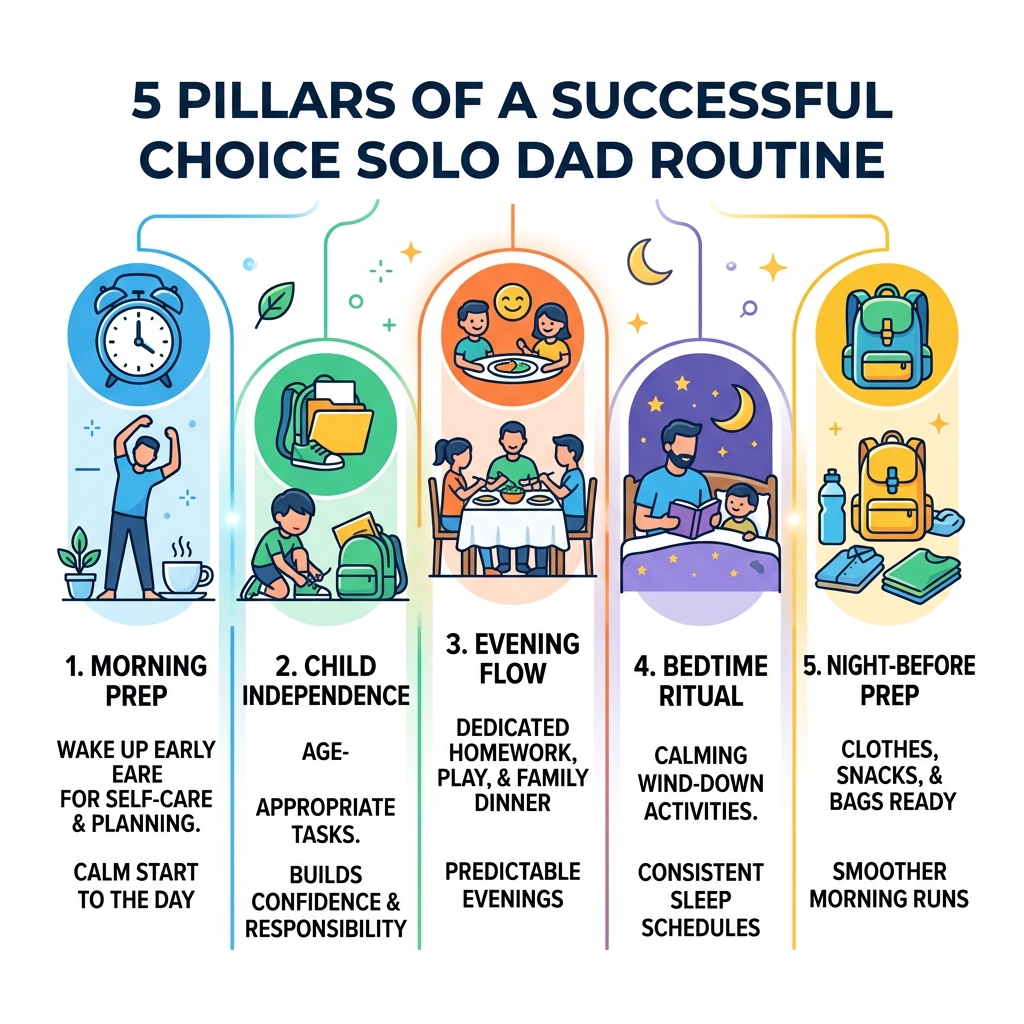
Here’s a quick overview of what works:
- Morning anchor – Wake up 60-90 minutes before your kids to prepare mentally and physically
- Child independence habits – Age-appropriate tasks like laying out clothes or packing backpacks
- After-school flow – Dedicated homework time, then play, then family dinner
- Bedtime ritual – Calming wind-down (reading, warm bath, brief check-in) at a consistent time
- Night-before prep – Clothes, snacks, and bags ready so mornings don’t spiral
Solo fatherhood is one of the hardest jobs there is. You’re the planner, the cook, the emotional anchor, the homework helper — all at once.
But here’s the thing: structure is your secret weapon.
Research shows that nearly 75% of children feel more secure when their daily activities are predictable. And when dads are actively involved, kids are 40% more likely to build strong relationships as adults. That’s not a small thing.
One single dad put it plainly after years of chaotic mornings: the shift from winging it to having a real routine felt less like discipline and more like giving himself a head start.
That’s exactly what this guide is about — building routines that work for you and your kids, without burning yourself out in the process.
The Power of Predictability: Why Choice Solo Dad Routines Matter
When we talk about choice solo dad routines, we aren’t just talking about a checklist of chores. We are talking about creating an environment where your children feel safe enough to grow. Predictability is the antidote to the anxiety that often bubbles up in single-parent households. When a child knows exactly what happens after school or who is picking them up, their brain can stop scanning for “danger” or uncertainty and start focusing on learning and play.
Research consistently highlights that children with involved single fathers are significantly more likely to form enduring, healthy relationships as adults. This is because a consistent routine models reliability. By showing up and sticking to the plan, we teach our kids that they can trust the world around them. Furthermore, we can use these structures as a platform for tips for raising confident children, ensuring they feel capable and secure in their daily lives.
Core Benefits of Choice Solo Dad Routines
The benefits of a solid routine extend far beyond just “getting things done.” For us as dads, it reduces the “decision fatigue” that leads to burnout. If you already know that Tuesdays are for tacos and Thursdays are for library visits, you’ve saved yourself a dozen micro-decisions.
For the kids, the benefits include:
- Anxiety Reduction: Predictability lowers cortisol levels in children.
- Improved Time Management: They begin to understand the flow of the day, which is a vital life skill.
- Enhanced Skill Development: Routines provide repeated opportunities to practice tasks like tying shoes or clearing the table.
We often find that these structured moments are the best times for parenting tips for family bonding, as they turn mundane tasks into shared experiences.
Fostering Independence with Choice Solo Dad Routines
One of the greatest gifts we can give our children is self-sufficiency. In a solo dad household, we simply cannot do everything ourselves without losing our minds. Routines allow us to delegate age-appropriate tasks.
By using chore charts or visual schedules, we empower our kids to take ownership of their day. Whether it’s a toddler putting their toys in a bin or a teenager managing their own laundry, these responsibilities build a sense of achievement. For more on this, check out our tips for teaching kids responsibility. When kids contribute to the household “machine,” they feel like valuable members of the team, not just passive observers.
Designing Your Morning: From Personal Prep to Family Bonding
Mornings used to be our biggest challenge. Waking up at the last second, scrambling for matching socks, and sprinting out the door is a recipe for a high-stress day. To master choice solo dad routines, we have to win the morning before the kids even open their eyes.
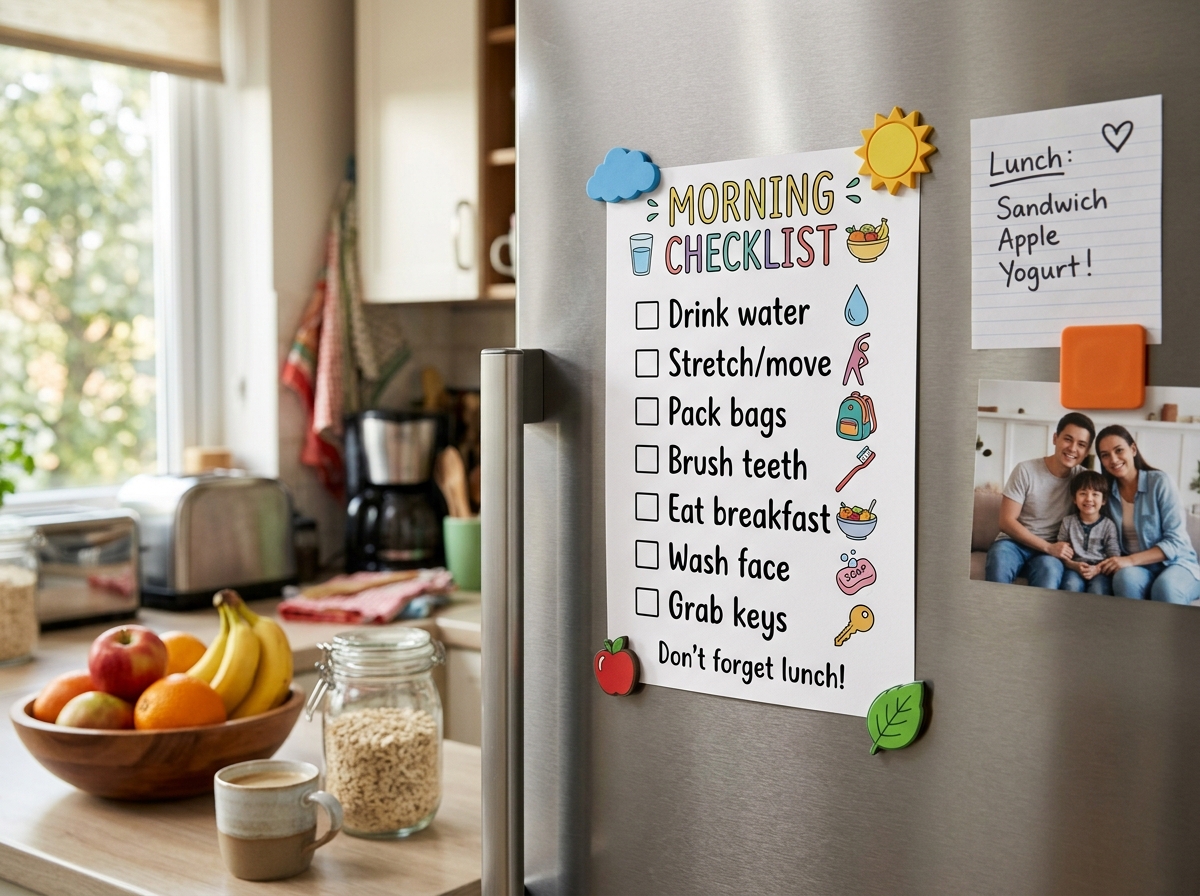
A “1.5-hour head start” might sound daunting, but it is a game-changer. This time isn’t for work; it’s for you. It’s about hydration, mindset centering, and movement. When you are calm and prepared, your children will mirror that energy. This is a crucial part of learning how to balance work and parenting—it starts with balancing yourself.
Personal Preparation and Mindset
We recommend waking up with a specific purpose. Instead of scrolling through news or social media, spend those first 20 minutes on yourself.
- Hydrate: Drink a large glass of water immediately.
- Meditate or Read: Center your mind before the chaos begins.
- Strategic Caffeine: Avoid caffeine dependency by waiting until you’ve been awake for an hour before your first cup.
- Lead by Example: If your kids see you calm and organized, they are less likely to spiral into a morning tantrum.
Child Independence and Morning Flow
Once the kids are up, the goal is a “flow,” not a fight. This is where your choice solo dad routines really shine. Encourage independent dressing by having clothes laid out the night before. Teach them to check their own backpack organization and help with simple breakfast prep.
If your children are well-rested, this process is much smoother. We’ve found that following tips for improving kids sleep habits directly impacts how cooperative they are at 7:00 AM. A child who knows their role in the morning routine is a child who feels capable.
Mastering the Mid-Day Pivot: After-School and Evening Flow
The transition from school or daycare to home is a high-risk time for meltdowns. Everyone is tired, hungry, and “peopled out.” This is where “anchor activities” come in—something predictable that happens every day the moment you get home.
| Age Group | Evening Focus | Key Routine Element |
|---|---|---|
| Toddlers | Sensory Play & Wind-down | Early dinner, bath, and “quiet time” toys. |
| School-Age | Homework & Activity | 45-minute study block, then 30 mins of outdoor play. |
| Teens | Autonomy & Connection | Check-in over dinner, then independent study/hobby time. |
Managing this pivot is essential for how to balance work and parenting 2, especially if you are finishing up remote work while the kids are home.
Balancing Homework and Play
We suggest a designated study time that is non-negotiable. However, don’t forget the importance of physical activity. Kids have been sitting in a classroom all day; they need to move.
During this time, practice active listening. Ask open-ended questions about their day. Use our tips for effective communication with kids to ensure they feel heard. If they feel connected to you, they are much more likely to sit down and finish that math worksheet without a struggle.
Mealtime and Family Connection
Dinner is the heart of the home. In our choice solo dad routines, mealtime isn’t just about nutrition; it’s about shared responsibilities. Even a five-year-old can set the napkins.
Shared meals are a great time to implement strategies on how to improve child behavior at home. Use this time to discuss the high and low points of everyone’s day. Keep it light, keep it warm, and keep the phones away from the table.
The Sleep Sanctuary: Bedtime Routines for Emotional Security
Bedtime is often the most emotional part of the day for a child. It’s when the distractions of the day fade away, and they might feel the weight of being in a single-parent home more acutely.
According to Scientific research on child sleep needs, children aged 6-12 require about 9-12 hours of sleep each night for optimal growth. Without this, even the best choice solo dad routines will fail because you’ll be dealing with exhausted, cranky kids. Calming rituals like warm baths and reading together are essential. You can find more detailed strategies in our tips for improving kids sleep habits.
Night-Before Prep Strategies
The secret to a successful tomorrow is a prepared tonight. Spend 20 minutes after the kids are in bed doing the “Solo Dad Reset”:
- Lay out clothes: Yours and theirs.
- Snack prep: Pack lunches and water bottles.
- Diaper bag/Backpack stocking: Ensure everything is by the door.
- Alarm setting: Double-check your wake-up time.
Emotional Presence and Vulnerability
As solo dads, we sometimes fall into the trap of just “checking boxes”—getting the chores done and the kids fed. But bedtime is for emotional presence. Validate their feelings, offer physical comfort, and provide reassurance.
If a tantrum occurs during the wind-down, stay calm. Our guide on how to handle tantrums in children emphasizes that your emotional regulation is their best teacher. Sometimes, they just need to know you are there and that they are safe.
Building Resilience: Flexibility and Self-Care for the Solo Father
You cannot pour from an empty cup. This is a cliché for a reason—it’s true. Statistics show that single dads who join support groups see a 65% improvement in parenting outcomes. You need a tribe, and you need to take care of yourself to be the father your kids deserve.
Sometimes, we have to look at parenting hacks for busy moms and realize that many of those time-saving tips apply perfectly to us, too. Whether it’s batch-cooking or using grocery delivery, use every tool at your disposal.
Prioritizing Fatherhood Self-Care
Self-care isn’t selfish; it’s maintenance.
- Exercise: Even 20 minutes of movement can drastically reduce stress.
- Mental Health: Don’t be afraid to seek therapy or join a men’s group.
- Hobbies: Maintain an identity outside of being “Dad.”
- Mindfulness: Practice being present in the moment.
For more deep-dives into staying sane, read our advice for single parents.
Handling Unexpected Challenges
No matter how good your choice solo dad routines are, life will throw curveballs. A child gets sick, a tantrum happens in Starbucks, or your work meeting runs late.
The key is “buffer time.” Don’t schedule your day so tightly that a 10-minute delay ruins everything. When things go sideways, stay calm. Use your how to handle tantrums in children protocols and remember that flexibility is a form of strength, not a failure of the routine.
Frequently Asked Questions about Choice Solo Dad Routines
How do I handle co-parenting dynamics within my routine?
If you are co-parenting, consistency across households is the “holy grail.” While you can’t control what happens at the other house, you can maintain respectful, child-focused communication. Avoid “keeping score” or competing for the title of “fun parent.”
Try to align on major points like bedtimes and discipline. For managing the calendar, we recommend checking out how to master your holiday co-parenting calendar to prevent scheduling conflicts before they happen.
What are the best ways to measure routine success?
Success isn’t about a perfect day; it’s about a better week. Look for these signs:
- Child Feedback: Are they calmer? Are they asking “what’s next” less often?
- Reduced Morning Chaos: Are you leaving the house on time without yelling?
- Behavioral Improvements: Are there fewer tantrums or power struggles?
- Personal Reflection: Do you feel more in control and less overwhelmed?
How can I adapt routines for different age groups?
Routines must evolve.
- Toddlers: Focus on sensory transitions and physical comfort.
- School-Age: Focus on homework blocks and developing tips for teaching kids responsibility.
- Teens: Shift toward autonomy. Let them design their own routine within your house rules. This builds trust and prepares them for adulthood.
Conclusion
Mastering choice solo dad routines is a journey of consistent improvement, not perfection. There will be days when the routine falls apart, and that’s okay. What matters is that you have a foundation to return to.
By prioritizing structure, self-care, and emotional connection, you are doing more than just managing a household—you are building a legacy of stability for your children. You don’t have to do this alone. Build your support networks, stay flexible, and keep growing. For more support and community, always revisit our advice for single parents.
You’ve got this, Dad. One routine at a time.
