
You Don’t Have to Do This Alone: Finding Support After Divorce
Divorced single moms support groups are one of the most effective ways to find community, practical help, and emotional healing after separation. Here’s a quick overview of your main options:
- Faith-based programs – Structured recovery programs like DivorceCare (13-week, video-based, available in-person or online)
- National ministries – Organizations like The Life of a Single Mom® with groups across the U.S.
- Local community groups – Long-running in-person groups at community centers (some with childcare and dinner included)
- Online/virtual groups – Weekly Zoom-based groups for high-conflict divorce, solo parents, and more
- Social Meetup groups – Over 40,000 members across 81 divorced parents groups worldwide
- Therapy-led groups – Professionally facilitated sessions combining emotional support with expert guidance
Divorce is hard. Much harder than most people expect. And when you’re also managing kids, finances, and a completely new daily routine, the weight can feel impossible to carry alone.
The good news? You don’t have to.
Millions of women have walked this exact road. Many have found that connecting with others who truly get it — not just friends or family, but people living the same reality — makes an enormous difference. Over 1 million people have already found support through programs like DivorceCare alone, and community groups in cities like Boston and Boulder have been running for more than a decade because the need is real and ongoing.
Whether you’re just starting to think about separation or you’ve been solo parenting for years, there’s a group out there for you.
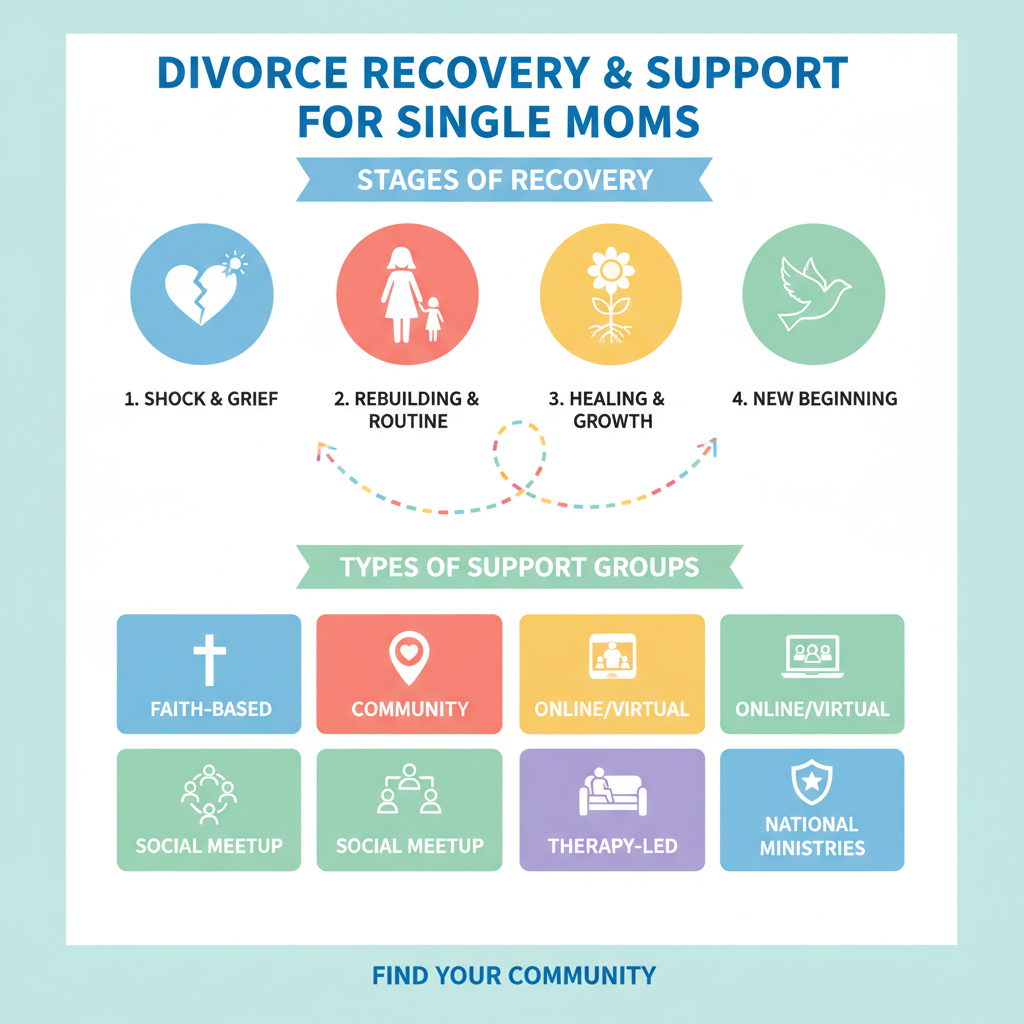
Types of Divorced Single Moms Support Groups

When we start looking for divorced single moms support groups, we quickly realize that “support” looks different for everyone. Some of us need a shoulder to cry on, while others need a roadmap for their bank accounts. Understanding the different types of groups available can help us choose the right “home” for our current stage of healing.
Peer-Led Support Groups
These are often the most common. They are usually run by women who have “been there, done that.” Peer-led groups focus on shared experience and mutual encouragement. Organizations like The Life of a Single Mom® provide a national network of these groups. They offer a space for life-giving relationships and life skills education. Because these groups are led by fellow moms, the atmosphere is usually very relaxed—think of it as a “sisterhood” where no topic is off-limits.
Therapy-Based and Facilitated Groups
If you feel like you need more professional guidance, therapy-based groups are a fantastic option. In areas like Boston, facilitators like Oona Metz lead groups that combine the emotional support of peers with the clinical insights of a therapist. These groups are often described as life-changing because they help us process deep-seated grief or trauma in a safe, structured environment.
Faith-Based Ministries
For many of us, our faith is the anchor during a storm. Programs like DivorceCare have been a staple for 25 years, helping over a million people heal. These groups typically use a structured 13-week, video-based curriculum. They focus on recovery through a spiritual lens but also cover very practical topics like co-parenting and financial stability. If you’re looking for a mix of discipleship and divorce recovery, this is a solid path. For more general guidance on this journey, check out our advice for single parents.
Social and Meetup Groups
Sometimes we just need to get out of the house and remember that we are more than just “divorced moms.” Meetup is a powerhouse for this. With over 40,000 members across 81 “Divorced Parents” groups worldwide, these lean more toward social reconnection. Groups like HOPE for Single Parents in the Boston and Metrowest area have over 1,500 members and focus on fun activities to help us rebuild our social lives.
Top Benefits of Joining Divorced Single Moms Support Groups
Why bother adding one more thing to your already overflowing calendar? Because the ROI (Return on Investment) for your mental health is massive. When we join divorced single moms support groups, we aren’t just “venting”—we are rebuilding.
| Feature | Peer-Led Groups | Therapy-Facilitated Groups |
|---|---|---|
| Primary Goal | Connection & Shared Experience | Emotional Processing & Healing |
| Leadership | Fellow Single Moms | Trained Therapists/Counselors |
| Cost | Usually Free or Low-Cost | Often Fee-Based |
| Structure | Casual or Curriculum-Based | Clinical & Goal-Oriented |
| Best For | Reducing Loneliness & Practical Tips | Deep Emotional Trauma & Growth |
Emotional Validation
There is nothing quite like the feeling of saying something “crazy” and having five other women nod their heads and say, “Me too.” This validation reduces the shame and isolation that often follow a divorce.
Practical Co-Parenting Strategies
Whether you are dealing with a “Disney Dad” or a high-conflict ex, other moms in your group have likely navigated similar waters. You’ll pick up parenting hacks for busy moms that you won’t find in any textbook, from managing schedule swaps to helping kids process their own grief.
Financial and Legal Guidance
Many groups, such as the Vesta divorce retreats or specific workshops at the Boulder JCC, bring in guest experts like mediators, financial planners, and lawyers. They help us understand alimony, child support, and how to rebuild credit after a split.
How to Find Local and Virtual Support Near You
Finding divorced single moms support groups shouldn’t be a second full-time job. Depending on where you live, there are several ways to track down a community that fits your schedule.
Finding Local Divorced Single Moms Support Groups
If you are in a major hub like Boston or Boulder, you are in luck. The Single/Divorced Moms Group – Boulder JCC has been running for over 10 years and is a gold standard for what a local group can be—offering everything from guest speakers to farm visits with baby goats!
For those in areas like Huntingdon Valley or Pine Valley, we recommend:
- Church and Synagogue Bulletins: Even if you aren’t a member, many religious organizations host DivorceCare or similar groups open to the public.
- Community Centers: Places like the Jewish Community Center (JCC) often host inclusive groups for people from all walks of life. Check out their upcoming sessions, such as the Single & Divorced Moms Group – Boulder JCC.
- Library and Coffee Shop Boards: Sometimes the best “underground” groups are found on a physical flyer.
Virtual Divorced Single Moms Support Groups
If you can’t find a local group—or you just can’t find a babysitter—virtual groups are a lifesaver.
- Solo Parent Society: Offers daily online groups for single parents, making it easy to find support no matter your timezone.
- Parents Helping Parents: Hosts virtual “High Conflict Divorce” groups via Zoom, providing a safe, confidential space for those dealing with difficult co-parenting dynamics.
- Social Media: Facebook groups can be a great starting point, but be sure to look for “Private” or “Hidden” groups to protect your privacy.
Balancing a search for support with your daily responsibilities can be tough, so learning how to balance work and parenting is a crucial skill to develop alongside your healing.
Specialized Resources for High-Conflict and Faith-Based Needs
Not every divorce is “amicable,” and not every mom is looking for the same type of spiritual or emotional connection. Specialized divorced single moms support groups cater to these specific needs.
High-Conflict Divorce Support
If your divorce involves legal battles or high-stress communication, a general “social” group might not be enough. Organizations like Parents Helping Parents offer specific groups for high-conflict situations. These sessions are usually confidential and facilitated by trained volunteers who help you navigate the “North Star” of your child’s well-being while managing an impossible ex-partner.
Faith-Specific Communities
- Jewish Moms: The Boulder JCC offers a long-standing Single/Divorced Moms Group – Boulder JCC that welcomes moms from all walks of life but operates within a supportive Jewish community framework.
- Christian Moms: Organizations like The Life of a Single Mom® and Solo Parent Society provide discipleship-focused support, helping women find healing through their relationship with God.
Unique Activities
Some groups go beyond the “sitting in a circle” format. We’ve seen groups incorporate:
- Pickleball and Movement: Physical activity is a proven stress-buster.
- Vision-Setting Workshops: Helping you create a “blueprint” for your new life.
- Self-Defense Classes: To help rebuild a sense of personal safety and confidence.
Starting Your Own Support Community
What if you search and find… nothing? In some rural areas or specific neighborhoods, local divorced single moms support groups might be non-existent. If that’s the case, we encourage you to consider starting your own. You don’t need a PhD in psychology to create a “sisterhood.”
Steps to Host Your Own Group
- Find a Venue: This could be your living room, a local library meeting room, or even a corner of a quiet park.
- Pick a Curriculum (Optional): If you don’t want to wing it, you can use materials from The Life of a Single Mom® or DivorceCare. They offer “certified” training and materials to help you lead effectively.
- Set the Ground Rules: Confidentiality is the most important rule. What is said in the group stays in the group.
- Provide Childcare: This is the biggest barrier for single moms. If you can’t afford a sitter, try a “co-op” model where one mom watches the kids while the others talk, then swap the next week.
- Market Your Group: Use local Facebook groups or apps like Meetup to find other moms in your area.
Starting a group is a big commitment, but it’s also incredibly rewarding. For more on managing your time while taking on new projects, see our guide on how to balance work and parenting 2.
Frequently Asked Questions about Divorced Single Moms Support Groups
Are there free support groups available for single moms?
Yes! Many divorced single moms support groups are free or very low-cost. Peer-led groups at churches or community centers often operate on a volunteer basis. Some groups, like those at the Boulder JCC, may have a nominal fee (around $5) to cover the cost of pizza or childcare, but financial assistance is almost always available if you ask.
What topics are typically covered in these meetings?
You can expect a wide range of topics, including:
- Grief and Emotional Healing: Processing the end of the marriage.
- Co-Parenting: Dealing with schedules and different household rules.
- Financial Planning: Rebuilding savings, budgeting, and understanding taxes.
- Self-Care: Finding time for yourself amidst the chaos.
- Dating After Divorce: When and how to get back out there.
Do most groups provide childcare and meals?
Many established in-person groups understand that single moms can’t just “leave the kids at home.” Groups like the ones in Boulder and Boston often provide a pizza dinner and onsite childcare to make it as easy as possible for you to attend. Always check the group’s event description or contact the organizer beforehand to confirm.
Conclusion
At Curta Arte, we believe that divorce doesn’t have to be the end of your story—it’s just the beginning of a new chapter. Finding the right divorced single moms support groups can be the catalyst that turns a period of pain into a journey of empowerment.
Whether you find your “sisterhood” at a local JCC, a DivorceCare group at a neighborhood church, or a virtual Zoom call for high-conflict co-parenting, the most important step is simply showing up. You are stronger than you feel right now, and there is a whole community of women waiting to remind you of that.
For more encouragement and practical tools, explore our more parenting tips and resources. You’ve got this, and we’re here to help you every step of the way.
