
What Every Parent Needs to Know When Going Through a Divorce
The best advice for parents getting divorced comes down to a few core principles:
- Tell children early and honestly — use simple, age-appropriate language and present a united front
- Reassure them it is not their fault — children almost always blame themselves, and they need to hear otherwise, repeatedly
- Keep conflict away from kids — parental fighting is the single biggest factor in how well children adjust
- Maintain routines and stability — consistent schedules, rules, and daily rhythms give children a sense of safety
- Stay positively involved — a strong relationship with even one caring parent makes a significant difference
- Watch for warning signs — regression, withdrawal, and mood changes can signal a child needs extra support
- Take care of yourself — you cannot pour from an empty cup
Divorce is hard. There is no version of it that is easy, and if you are reading this, you are probably in the middle of one of the most overwhelming experiences of your life.
But here is the thing: how your children come through this depends far less on the divorce itself than on what happens around it.
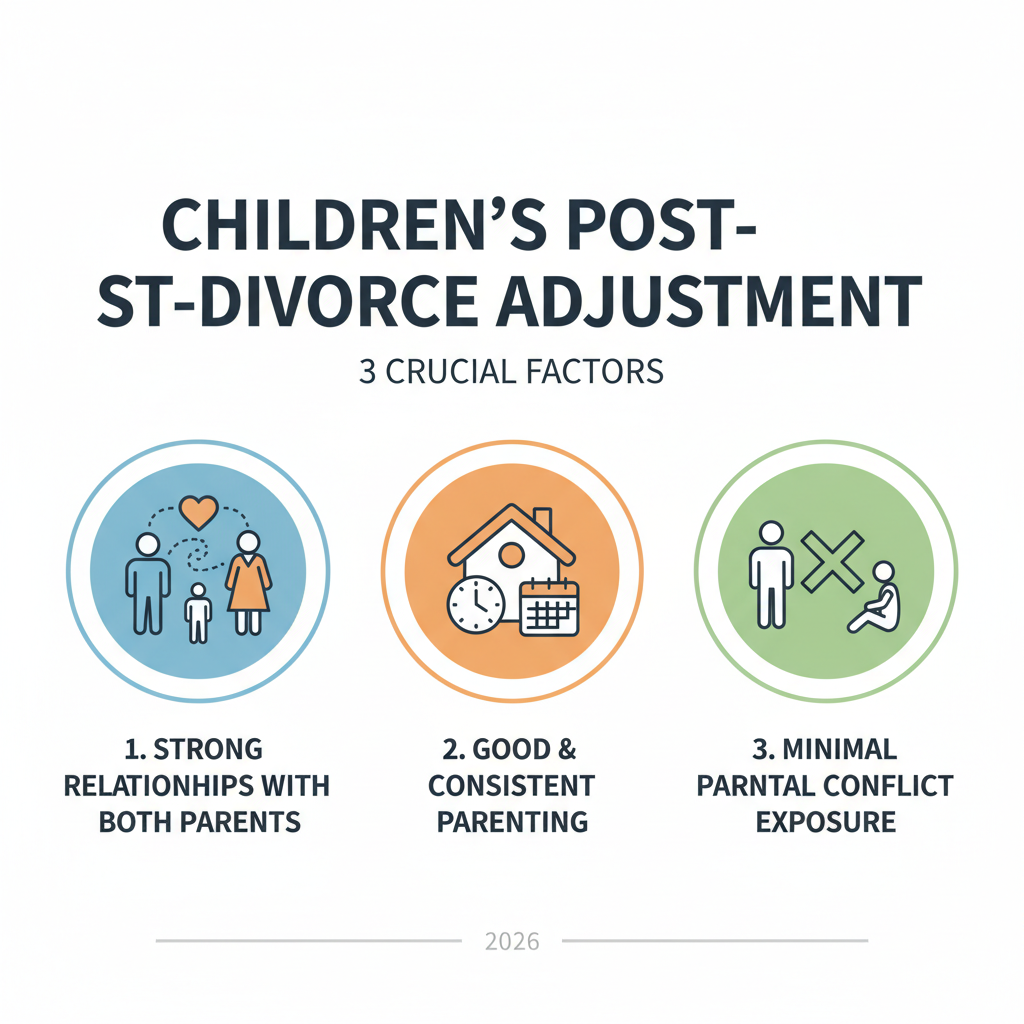
Research consistently shows that three factors determine how well children adjust after their parents separate — a strong relationship with both parents, good and consistent parenting, and minimal exposure to conflict between parents. The divorce is not the defining moment. Your response to it is.
One family counselor captured this perfectly with a story about a three-year-old girl who, upon hearing about her parents’ divorce, looked horrified, her bottom lip quivering, and sobbed: “But who’s going to look after me?” Not “why are you splitting up?” Not “whose fault is it?” Just the most concrete, immediate fear a small child could have. That moment illustrates everything parents need to understand about guiding kids through this process — their world is small, their needs are real, and your job is to make them feel safe.
This guide walks you through the first steps: what to say, how to say it, and how to build a stable foundation for your family on the other side.
Breaking the News: How to Tell Your Children
Telling your children that their lives are about to change is likely the hardest conversation you will ever have. It requires a delicate balance of honesty and protection. The gold standard of advice for parents getting divorced is to present a united front. Even if you can barely stand to be in the same room, sitting down together to deliver the news sends a powerful message: “We are still a team when it comes to taking care of you.”
Use neutral, non-blaming language. Instead of saying, “Dad found someone else” or “Mom is leaving us,” try something like, “We have decided that we can’t live together anymore, and we believe it’s better for everyone if we live in different houses.” This focuses on the adult decision rather than pointing fingers. The goal is to provide a “soft landing” for the news. For more on how to frame these difficult talks, check out our tips for effective communication with kids.

Tailoring the Message by Age Group
Children process information based on their developmental stage. A toddler doesn’t care about legal custody; they care about who is putting them to bed tonight.
- Toddlers and Preschoolers (0-5): They live in the “here and now.” Keep explanations very simple. Focus on concrete changes: “Daddy will have a new house, and you will have a bedroom there with your blue blanket.” They may show distress through clinginess or “baby talk.” For more specifics on this age group, see our advice for parents of preschoolers.
- School-Age Children (6-11): This group often struggles with “black-and-white” thinking. They might wonder if the divorce happened because they didn’t clean their room. They need explicit, repeated reassurance that this is an adult problem they didn’t cause.
- Teenagers (12-18): Teens may react with anger, withdrawal, or even a sense of relief if there has been high tension at home. They value their independence, so involve them in scheduling discussions where appropriate, but don’t force them to act as your emotional confidant.
Handling Difficult Questions Honestly
“Why is this happening?” “Do you still love each other?” “Where will the dog live?”
When these questions come, answer as truthfully as possible without oversharing “adult” details. If they ask why, a safe answer is: “We’ve tried hard to work through our problems, but we’ve realized we are both happier and better parents when we live apart.”
Logistical questions are often a child’s way of seeking stability. If you don’t have an answer yet—like exactly which days they will be where—it’s okay to say, “We are working on that plan right now, and as soon as we know, we will tell you. But we promise you will still see both of us.” Use this as an opportunity for teaching kids responsibility by showing them how you are responsibly handling a difficult transition.
Essential Advice for Parents Getting Divorced: Prioritizing Emotional Well-being
The emotional fallout of divorce is often compared to a grief cycle. Your children are losing the family structure they once knew, and it is vital to validate their feelings. Whether they are angry, sad, or even numb, let them know those feelings are normal.
One of the most critical pieces of advice for parents getting divorced is to combat the “guilt factor.” Research from Yale Medicine emphasizes that children often internalize the breakup. You must tell them—and keep telling them—that the divorce is 100% an adult decision and nothing they did or said could have changed it. This is a cornerstone of raising confident children during a crisis.
Reassuring Children of Unconditional Love
In the middle of a divorce, children often fear “disposable” love. They think, If Mom stopped loving Dad, could she stop loving me?
Counteract this with an “over-abundance” of affection. This doesn’t mean buying them toys; it means physical presence. Hugs, high-fives, and verbal affirmations like “I love you no matter what” act as a safety net. Ensure they know that while the relationship between the parents is changing, the relationship between parent and child is permanent and unbreakable.
Helping Children Express Complex Emotions
Not all children will talk about their feelings. Some will “bottle up” their emotions, which can lead to depression or anxiety later.
- Naming Feelings: Help younger children put words to their physical sensations. “It looks like your tummy is tight; are you feeling worried?”
- Journaling: For older kids and teens, encourage writing. Studies show that teens who describe negative emotions are better protected against depression. Writing about emotionally significant events has been scientifically proven to increase mental well-being and reduce anxiety.
- Active Listening: When they do speak, just listen. Avoid the urge to “fix” the feeling or defend yourself. Sometimes they just need to say, “This sucks,” and hear you say, “I know, it really does.”
Maintaining Stability and Routines Post-Separation
Children thrive on predictability. When their world feels like it’s spinning out of control, the “boring” parts of life—like 7:00 PM bath time or Tuesday taco night—become anchors of safety.
| Feature | Consistent Routines | Chaotic Transitions |
|---|---|---|
| Child’s Stress Level | Lower; they know what to expect. | Higher; constant “survival mode.” |
| Behavior | More regulated and predictable. | Prone to outbursts or regression. |
| School Performance | Generally stable. | Likely to decline due to lack of focus. |
| Sense of Security | Rooted in the “new normal.” | Fragile; feels like “living out of a suitcase.” |
Maintaining these rhythms is essential for children’s development during a transition.
Practical Advice for Parents Getting Divorced Regarding Daily Routines
To make the two-household life work, aim for “functional similarity.” You don’t need identical houses, but having similar rules about homework, screen time, and bedtime prevents the “Disneyland Parent” vs. “Drill Sergeant” dynamic.
- Duplicate Items: If possible, buy two sets of the basics—chargers, favorite pajamas, sports gear, and toiletries. This reduces the stress of “I forgot my cleats at Mom’s house.”
- Transition Checklists: For younger kids, a visual checklist of what needs to go in their backpack for “switch day” can provide a sense of control.
- Homework Help: Stay involved in their school life. If you usually helped with math, continue doing that via FaceTime or during your parenting time.
Minimizing Conflict During Transitions
The “hand-off” is often the most stressful time for a child. They are mourning the parent they are leaving while trying to gear up for the parent they are joining.
Keep exchanges neutral. If you and your ex cannot speak civilly, do the hand-off at a neutral location like a school or a park. Be punctual—waiting on a curb for thirty minutes for a late parent is agonizing for a child. Use these moments to model the family bonding values you still want to instill, even in a split family.
Effective Co-Parenting and Communication Strategies
Co-parenting is not about liking your ex; it’s about a professional partnership where the “business” is raising healthy kids. This requires clear boundaries and a commitment to keeping the kids out of the middle. For more on navigating this new role, see our advice for single parents.
Co-Parenting Advice for Parents Getting Divorced to Minimize Conflict
High-conflict communication is like poison to a child’s environment. To detoxify your interactions:
- No Messengers: Never ask a child to tell the other parent about child support or schedule changes. Use direct communication.
- Written Communication: If verbal talks turn into fights, move everything to email or text. This creates a “paper trail” and allows you to edit out snarky comments before hitting send.
- Cooling-off Periods: Unless it’s an emergency, wait 24 hours before responding to a provocative message.
- Co-Parenting Apps: Tools like “Our Family Wizard” or “TalkingParents” keep schedules, expenses, and messages in one place, often featuring “tone meters” to flag aggressive language.
Avoiding Triangulation and Loyalty Conflicts
Triangulation happens when a parent tries to get the child to “take their side.” It is a form of emotional burden that no child should carry.
Protect their childhood by being a “vault” for your adult frustrations. If you need to vent about your ex, do it with a therapist or a friend—never your child. Avoid asking “spying” questions like, “Who was at the house this weekend?” or “What did Mom spend money on?” This makes the child feel like a secret agent in their own home.
Recognizing When Your Child Needs Professional Help
While most children “bounce back” within two to three years of a divorce, some struggle more deeply. It is our job as parents to watch for the “red flags” that indicate they need more than just a listening ear.
Red Flags Across Different Developmental Stages
According to parenting experts, you should look for:
- Toddlers/Preschoolers: Regression in toilet training, extreme separation anxiety, or “acting out” through biting or hitting.
- School-Age: A sudden drop in grades, withdrawal from friends, or frequent physical complaints like stomachaches or headaches (often a sign of internalized stress).
- Teens: Substance use, risky sexual behavior, self-harm, or extreme defiance.
Also, watch for the “sleeper effect”—where a child seems fine for years but begins to struggle with intimacy or trust as they reach young adulthood.
Types of Therapeutic Support
If you notice these signs, don’t wait. Professional intervention can provide the tools a child needs to process their trauma.
- Play Therapy: Ideal for younger kids who can’t yet articulate their feelings. They use toys and art to “play out” their anxieties.
- Family Counseling: Helps the whole unit (or parts of it) learn new ways to communicate.
- TF-CBT (Trauma-Focused Cognitive Behavioral Therapy): Effective for children who have witnessed high conflict or domestic issues.
- Support Groups: Many schools offer “Banana Splits” or similar groups where kids can realize they aren’t the only ones with divorced parents.
Parental Self-Care: Supporting Yourself to Support Them
You’ve heard it a thousand times: you have to put on your own oxygen mask first. If you are a wreck, your children will feel it. They take their emotional cues from you. If you are “okay,” they feel they can be okay too.
Managing Your Own Emotional Health
Divorce is a marathon, not a sprint. You need to manage your stress to balance work and parenting effectively.
- Therapy: Having a neutral space to process your anger and grief is essential.
- Healthy Habits: Eat well, sleep, and exercise. It sounds cliché, but physical health directly impacts emotional resilience.
- Journaling: Just like for the kids, writing down your thoughts can help you process the “emotional dumping” so you don’t do it on your children.
Building a New Support Network
You are transitioning from a two-parent household to a different structure. You need a village.
- Community Groups: Look for local “Parents Without Partners” chapters or religious support groups.
- Trusted Friends: Lean on people who will support your goal of healthy co-parenting, not those who will just “egg on” your anger toward your ex.
- Professional Guidance: Ensure you have sound legal and financial advice so that the “logistics” of divorce don’t keep you in a state of constant panic.
Frequently Asked Questions about Divorce and Parenting
How do I stop my child from feeling guilty about the divorce?
The best way is through “over-communication” on this specific point. Tell them: “This was a grown-up decision. You are a kid, and your only job is to be a kid. Nothing you did caused this, and nothing you do can fix it.” Repeat this until you think they’re tired of hearing it—and then say it again.
What is the best way to handle a high-conflict ex-partner?
Parallel parenting is often the answer. Instead of trying to “co-parent” (which requires collaboration), you “parallel parent.” You have your rules, they have theirs. Communication is strictly via email or apps, and you focus entirely on your own relationship with the child rather than trying to change the other parent.
How long does it typically take for children to adjust to the new family structure?
Research suggests that most children experience a period of significant upheaval for about 2 to 3 years. After this transition period, the majority of children stabilize and return to their baseline level of well-being, provided that parental conflict remains low.
Conclusion
At Curta Arte, we know that divorce feels like an ending, but it is also a beginning. By following this advice for parents getting divorced, you are doing the hard work of building a new, stable future for your family.
It won’t be perfect. There will be “messy” days, forgotten backpacks, and tears. But if you lead with empathy, keep the conflict away from the kids, and prioritize your own healing, your children can emerge from this experience with a deep sense of resilience and the knowledge that they are loved by two parents—even if those parents live in different houses.
The road to healing takes time, but you don’t have to walk it alone. For more support and guidance on this journey, explore more parenting tips and resources at Curta Arte. Remember: you’re the parent, you’ve got this!
