
Why Gameschooling is the Secret Weapon for Modern Families
For many of us, especially those navigating the complexities of solo parenting, the traditional “sit-down-and-work” model of schooling can feel like an uphill battle. This is where gameschooling becomes a true secret weapon. It isn’t just about entertainment; it’s about interactive learning activities that transform a dry subject into a lived experience.
When we bring the best homeschool games to the table, we are teaching far more than the printed rules. Children learn vital social skills: how to wait their turn, how to follow multi-step directions, and how to win or lose with grace. We’ve all seen the “Monopoly meltdown,” but in a controlled homeschool environment, these moments become “teachable moments” for emotional regulation.
Strategic games also foster critical thinking. Instead of memorizing a formula, a child playing a game like Castle Panic has to calculate risks and collaborate with others to protect their tower. This organic integration of skills means that by the time you finish a round, your child has practiced math, logic, and communication without ever feeling “drilled.”
Adapting Play for Multi-Age Groups
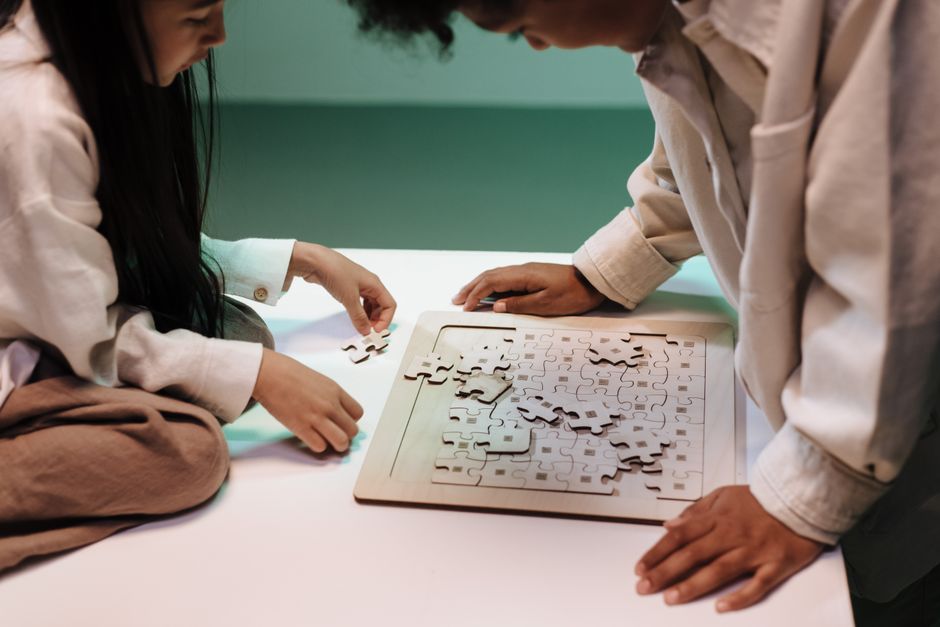
One of the biggest hurdles for homeschool families is the age gap. How do you play a strategic game when you have a 10-year-old and a 5-year-old? The secret lies in rule modification. Experienced homeschoolers often find that “boring” kids’ games lose their appeal quickly, but advanced games can be simplified.
For example, when playing a game like Carcassonne, a younger child can be responsible for simply matching the tiles like a puzzle, while the older child handles the scoring and “meeple” placement. Team play is another fantastic strategy; pairing a younger child with an adult allows them to participate in the decision-making process without the frustration of complex mechanics. This approach turns every game into an opportunity for problem-solving.
Quick Setup Games for Busy Days
Let’s be honest: some days, we just don’t have the bandwidth for a two-hour strategy session. On busy days, portability and quick setup are king. Games like Tenzi or Bananagrams are perfect because they can be played in ten minutes and fit easily into a purse or glove box.
- Tenzi: A dice game that reinforces subitizing (recognizing quantities without counting) and can be adapted into a cooperative mission.
- Bananagrams: A “scrabble-in-a-pouch” that builds spelling skills on the fly.
- Rory’s Story Cubes: With 54 unique images that can be combined in over 10 million ways, these are the ultimate tool for spontaneous creative writing or oral storytelling.
Best Homeschool Games for Math and Logic Mastery
Math is often the subject that causes the most friction in homeschooling. However, mental math becomes second nature when it’s the key to winning. Games like 7Ate9 or Clumsy Thief (where you stack cards to reach $100) make teaching numbers feel like a high-stakes heist rather than a chore.
Prime Climb is a standout in this category. It uses a color-coded board to help kids visualize prime numbers, factors, and multiplication. It requires no reading, making it accessible for younger kids who are mathematically precocious but still developing literacy skills.
| Game | Primary Math Skill | Logic/Strategy Level |
|---|---|---|
| Prime Climb | Multiplication, Division, Primes | High |
| 7Ate9 | Fast Addition & Subtraction | Medium |
| Tiny Polka Dots | Number Sense, Counting | Low (Early Learner) |
| Proof! | Mental Math Equations | High |
| Sumoku | Addition & Patterns | Medium |
Screen-Free STEM and Coding Logic
In a world full of tablets, there is something magical about hands-on STEM. Turing Tumble is a game where kids build mechanical computers powered by marbles. It teaches the fundamentals of coding—binary, logic gates, and “if/then” statements—entirely without a screen. It’s essentially brain boosting fun that prepares them for 21st-century careers.
Similarly, Circuit Maze offers 60 challenges that teach the basics of electrical engineering. Players must arrange tokens to create a real circuit that lights up a beacon. These games provide a tangible “aha!” moment that digital apps often lack.
Strategic Thinking and Problem Solving
For developing deep-level reasoning, we love games like Kingdomino or Gridopolis. In Kingdomino, players must build a 5×5 grid to maximize their territory’s value, teaching spatial awareness and multiplication. These games are excellent for enhancing cognitive skills because they require players to plan several moves ahead while reacting to their opponents’ choices.
Top-Rated Language Arts and History Games for Every Age
Language arts isn’t just about phonics; it’s about the love of words. League of the Lexicon is a dream for word lovers, featuring 2,000 questions covering everything from grammar to archaic word origins. For homeschoolers, the League of the Lexicon Junior Edition is highly recommended as it balances challenge with accessibility.
History, too, can be brought to life through the best homeschool games. Trekking Through History is a masterpiece of design. It includes 108 history cards spanning from 37,000 BCE to 1994. As you play, you can’t help but fall down “rabbit holes” of learning. If you pull a Benjamin Franklin card, you might spend the next hour discussing the Enlightenment or his kite experiment.

Building Literacy with the Best Homeschool Games
If you are looking for specific curriculum support, these three are “must-haves”:
- Spelling Bell First Edition: This game (Grades 7-12) turns spelling into a competition where you can “lock in” points or risk them for harder words. It leverages neuroplasticity to help with word retention.
- Clover Leap: Perfect for ages 5-10, this game uses color-coded pieces to help kids build sentences. It’s a hands-on way to teach parts of speech (nouns, verbs, adjectives).
- Apples to Apples Junior: Great for expanding vocabulary and understanding nuances in word meanings through comparison.
Learning these linguistic skills through play reduces the “word fatigue” that many struggling readers face.
Exploring the World Through Geography and History
Geography doesn’t have to be just labeling maps. Ticket to Ride teaches US or European geography as players plan train routes across the continent. The Scrambled States of America is another classic that helps kids memorize state shapes, capitals, and nicknames through visual recognition. These games build a mental map of the world that stays with a child much longer than a worksheet ever would.
Choosing the Best Homeschool Games by Age Group
Selecting the right game is all about matching the child’s developmental stage with the game’s mechanics. You want a game that is challenging enough to be interesting but simple enough to avoid frustration.
Early Learners and Preschoolers (Ages 4-8)
At this age, we want to focus on educational games for toddlers and early elementary students that build “number sense” and basic literacy.
- Tiny Polka Dots: A simple card game that teaches counting and number recognition in multiple visual forms.
- Outfoxed: A cooperative whodunit where players use a “clue cracker” to find the guilty fox. It’s so engaging that some kids play it 30 times in the first two weeks!
- Sleeping Queens: Created by a 6-year-old, this game is fantastic for teaching basic addition and memory.
Elementary and Middle School Favorites (Ages 8-12)
This is the “sweet spot” for educational games. Kids at this age are ready for more complex strategy and longer playtimes.
- Castle Panic: A cooperative tower defense game where you work together to slay monsters.
- Prime Climb: As mentioned, the gold standard for middle-grade math.
- Turing Tumble: An incredible way to introduce computer logic to 10-12 year olds.
Advanced Strategy and High School Best Homeschool Games
High schoolers need games that challenge their intellect and offer deep replayability. League of the Lexicon or the advanced levels of Spelling Bell are perfect for this. For science, Totally Gross covers biology and chemistry with a humorous, “icky” twist that keeps teens engaged.
Cooperative Play: Building Bonds and Reducing Competition
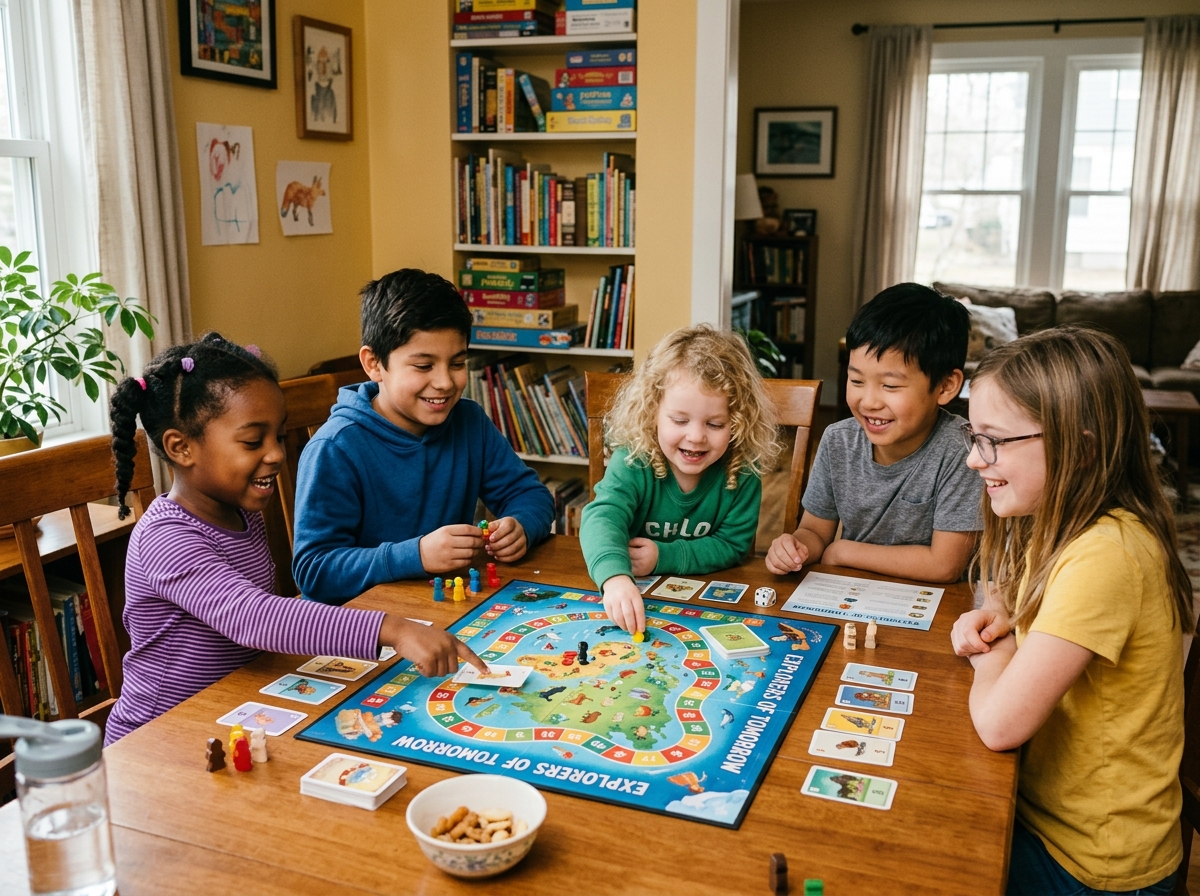
For families dealing with sibling rivalry or for the solo parent who wants to foster a sense of “we’re in this together,” cooperative games are a lifesaver. In these games, everyone either wins together or loses together.
- Forbidden Island: Players must work as a team to collect treasures and escape a sinking island.
- Pandemic: The Cure: A dice-based version of the classic that sets up in less than a minute.
- Peaceable Kingdom Games: This brand specializes in STEM activities at home through cooperative play for younger children.
Cooperative play reduces the “win-at-all-costs” mentality and encourages kids to communicate, share resources, and think about the group’s success rather than just their own.
Frequently Asked Questions about Homeschool Games
How do I incorporate games into a daily homeschool routine?
Many families use “Morning Baskets” where they start the day with a quick game to wake up the brain. Others use “Friday Game Days” as a reward for completing the week’s curriculum. If a child is struggling with a specific concept (like fractions), replace that day’s worksheet with a math-focused game.
What are the most affordable games with high replay value?
Card games like Dutch Blitz, Uno, and Phase 10 are very affordable and can be played hundreds of times. Buying “bulk dice” and using them for games like Tenzi is another great budget hack. Don’t forget to check local thrift stores or “buy nothing” groups!
Can games really replace traditional math or spelling curriculum?
While games are powerful, most families use them as a “supplemental” tool. However, for subjects like logic, geography, and social skills, games can often serve as the primary teaching method. For core subjects like math, they provide the “fluency” and “practice” that makes the formal curriculum much easier to digest.
Conclusion
At Curta Arte, we understand that homeschooling as a single parent is a balancing act. You are the teacher, the principal, and the playmate. By choosing the best homeschool games, you’re not just checking an educational box; you’re creating memories and building a stronger bond with your children.
Whether you are navigating the aftermath of a divorce or are a solo parent by choice, we are here to offer empathetic guidance. Gameschooling is more than just “playing”—it’s a way to make education a joyful, shared journey. So, clear off the kitchen table, grab a deck of cards, and let the learning begin!
