
You Don’t Have to Do This Alone: What Single Mum Groups Can Do for You
Single mum groups are communities where solo mothers connect, share experiences, and support each other — and they’re easier to find than you might think.
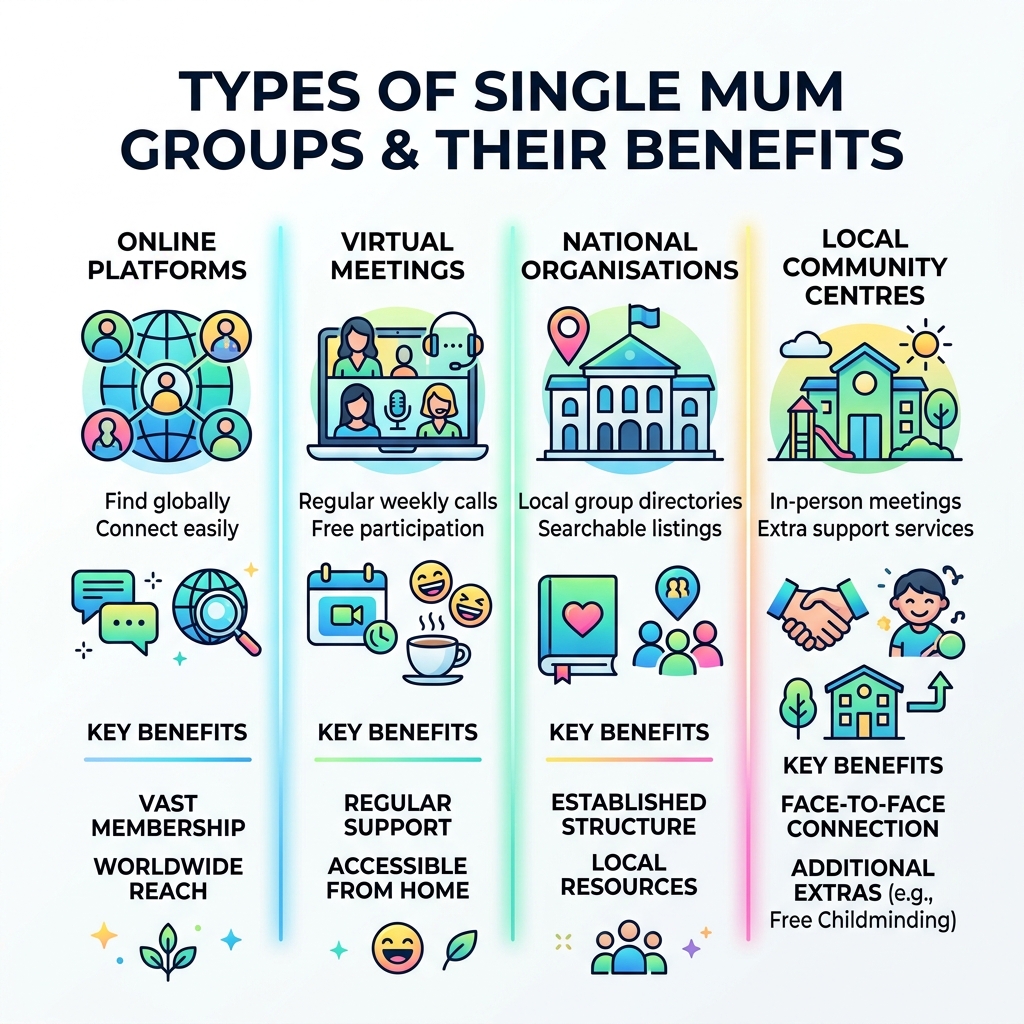
Here are the main ways to find and join one:
- Online platforms like Meetup host 78+ single parent groups with over 36,000 members worldwide
- Virtual Zoom groups (like Solo Parent and Parents Helping Parents) meet weekly and are free to join
- National organisations like The Life of a Single Mom and MOMS Canada offer searchable local group directories
- Facebook communities like Single Mum Society offer free, always-on peer support
- Local community centres often run in-person groups with extras like free childminding
Think about this for a moment: there are over 23 million kids growing up in single-parent homes in the US alone. In Canada, that’s another 1.5 million single mums navigating the journey solo.
That’s a lot of people who know exactly what you’re going through.
Yet so many single mums still feel completely alone. The mental load, the late nights, the decisions with no one to bounce them off — it adds up fast.
The good news? There’s a growing global network of single mum groups built by and for women in exactly your situation. Whether you’re newly single, parenting by choice, or years into the journey, there’s a community that fits.
This guide will help you find it.
The Power of Joining Single Mum Groups
When we talk about single mum groups, we aren’t just talking about a place to vent (though a good vent session is medically necessary sometimes!). We are talking about a lifeline. The statistics are staggering: with 23 million children in the US and 1.5 million in Canada living in single-parent households, the “solo” experience is actually a massive, shared reality.
The primary benefit of these groups is the immediate reduction of isolation. Research consistently shows that social support is a primary buffer against parenting stress. When you join a group, you gain access to:
- Emotional Support: Knowing that someone else stayed up until 2 AM worrying about a fever or a school form makes that burden feel 50% lighter.
- Shared Experiences: You don’t have to explain why you’re tired; they already know.
- Practical Advice: From the best local pediatricians to how to handle a tricky car seat installation, the collective wisdom of a group is better than any search engine.
At Curta Arte, we believe that You Don’t Have to Do It All Alone. Building a “squad” creates resilience. It turns a “surviving” mindset into a “thriving” one. If you are looking for a starting point, our Advice for Single Parents offers a foundation for navigating these communal waters.
Finding Emotional Stability in Single Mum Groups
One of the most profound impacts of single mum groups is the stabilization of mental health. Many of these groups are peer-led and provide a safe, non-judgmental space to discuss things that might feel “taboo” elsewhere—like parenting guilt or the sheer exhaustion of co-parenting.
In these spaces, you’ll find:
- Validation: Hearing “I feel that way too” is often more healing than professional therapy for everyday stressors.
- Coping Strategies: Members often share Parenting Tips that are battle-tested in solo households.
- Confidence Building: Seeing other mums succeed gives you the roadmap to believe in your own capabilities.
Whether it’s a weekly Zoom call or a monthly coffee meet-up, these groups focus on stress management and changing what can be changed while accepting what cannot.
Specialized Single Mum Groups for Unique Journeys
Not every single mum journey looks the same, and the support landscape has evolved to reflect that. There are now specialized single mum groups tailored to specific circumstances:
- Single Mothers by Choice (SMC): These groups support women who have chosen to become mothers through donor conception or adoption. They offer stages of support for “Thinking,” “Trying,” “Pregnancy,” and “Parenting.”
- Perinatal and Postpartum Support: For those with babies up to two years old, specialized groups address the high risk of postpartum anxiety and depression that solo parents face without a partner in the home.
- Working Mums: Balancing a career and a household is a Herculean task. Groups focused on How to Balance Work and Parenting and How to Balance Work and Parenting (Part 2) provide hacks for time management and office politics.
- Widowed or Divorced Mothers: These groups often focus on the specific grief or legal hurdles associated with losing a partner or navigating the family court system.
Where to Find Your Local or Virtual Squad
Finding your people has never been easier thanks to digital platforms, but the variety can be overwhelming. Do you want a late-night chat on Facebook or an in-person Saturday morning playdate?
Online Community Platforms
Platforms like Meetup are goldmines for finding single mum groups. Currently, there are over 36,000 members across 78 specific single-parent groups worldwide. You can find everything from the “New York Single Parents Meetup Group” (with over 2,500 members) to niche groups focused on “Forest Bathing” for solo parents.
Dedicated Organizations
Organizations like “The Life of a Single Mom” provide interactive maps where you can enter your zip code and find “Certified” groups that use specific training and materials. In Canada, “MOMS Canada” offers free support groups and resources for the 1.5 million mums across the provinces.
Social Media and Zoom
If you can’t leave the house because the kids are asleep, virtual groups are your best friend. Many organizations now run daily Zoom meetings. These are “come as you are” spaces—no makeup or clean house required.
| Feature | Online Support Groups | In-Person Support Groups |
|---|---|---|
| Accessibility | High (Join from your couch) | Moderate (Requires travel) |
| Childcare | Not needed | Often provided onsite |
| Connection | Fast and frequent | Deeper, physical presence |
| Cost | Usually free | May have small meal/activity fees |
| Best For | Late-night support & busy schedules | Building local friendships & playdates |
Popular Global and Local Networks
Some groups have gained massive followings due to their unique approach. For instance, the Forest Bathing group for single parents has over 8,000 members, proving that mums are looking for wellness as much as parenting advice.
Awareness is also growing through events like National Single Parent Day on March 21st. While President Ronald Reagan established this day in 1984, many groups are only now using it as a major rallying point for community events and advocacy.
For those navigating complex schedules, finding a group that helps you manage the logistics is key. We often recommend checking out How to Master Your Holiday Co-Parenting Calendar to help bring some order to the chaos before you head to your next group meeting.
What to Expect: Events, Activities, and Resources
What actually happens when you join one of these single mum groups? It’s rarely just sitting in a circle with tissues. Modern groups are dynamic and resource-heavy.
Common Activities Include:
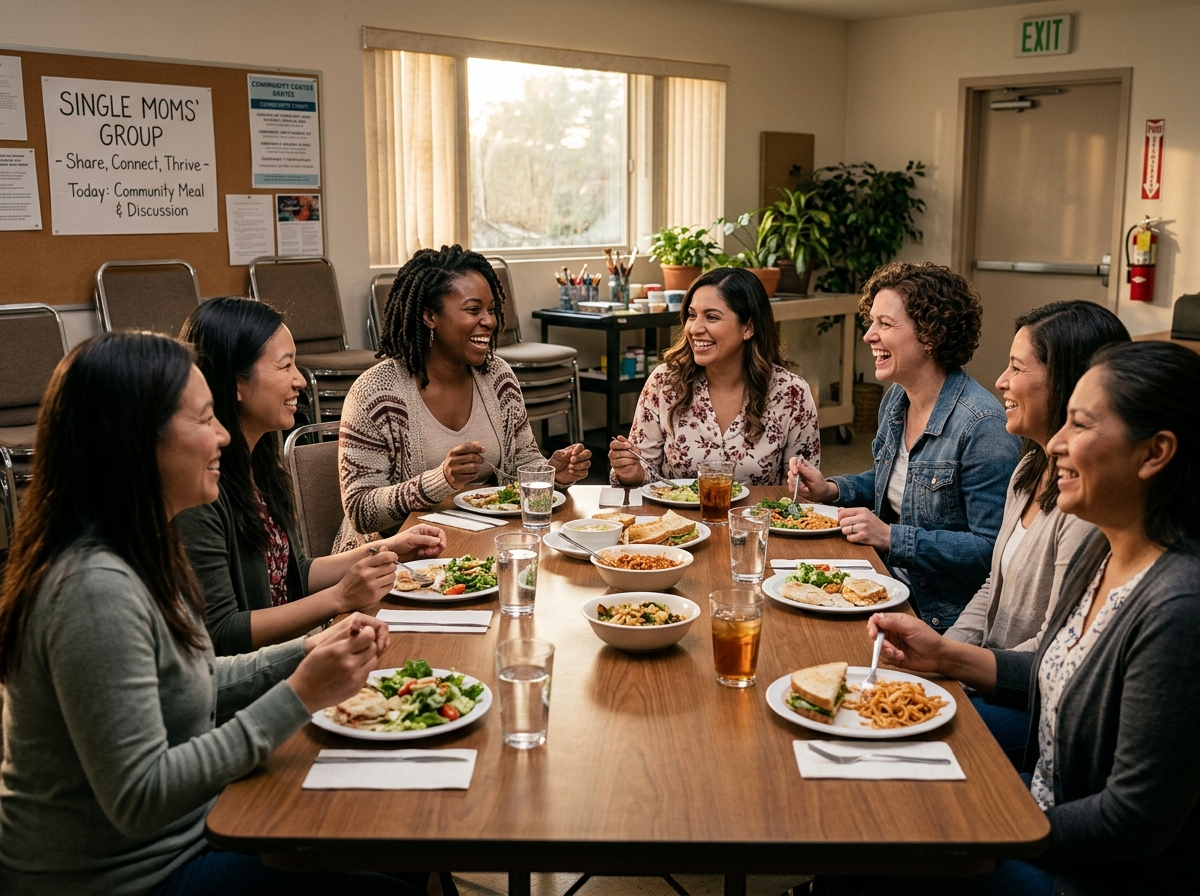
- Monthly Meals: Many local groups host “Family Dinners” where kids play together and mums eat a meal they didn’t have to cook.
- Workshops: You’ll find sessions on financial management, building a “village,” and self-care strategies.
- Retreats: Some larger networks offer yearly retreats for mums and kids to get away and recharge.
- Practical Support: Groups like “Single Side Up!” focus on hands-on help, from car repairs to household fixes.
Educational Resources: Many groups provide structured learning. This might include:
- Co-Parenting and Parallel Parenting Strategies: Navigating a difficult ex-partner is a common topic of discussion.
- Legal Guidance: Information on the family court system and your rights as a solo parent.
- Life Skills: Everything from career coaching to Parenting Hacks for Busy Moms.
According to scientific research on the impact of social support on parenting stress, these interactions aren’t just “nice to have”—they actually lower the physiological markers of stress in parents. When you have a squad, your body literally relaxes.
Frequently Asked Questions about Single Parent Support
How do I find single mum groups near me?
The fastest way is to use a directory with a zip code search. Organizations like “The Life of a Single Mom” or “MOMS Canada” have built-in locators. Additionally, searching “Single Parent” on Meetup.com will show you groups within a 5 to 500-mile radius of your current location. Don’t forget to check your local community center or library—they often host “closed” groups that meet in 12-week cycles.
Are there free support groups for single mothers?
Yes! The vast majority of single mum groups are free. Non-profit organizations and faith-based ministries often provide these services as part of their community outreach. Many even offer free childcare (sometimes called childminding) during the meetings so you can actually focus on the conversation without a toddler climbing on your head.
Can I join a group if I am a single mother by choice?
Absolutely. There are specialized communities like “Single Mothers by Choice” (SMC) that focus specifically on the unique path of solo parenting by design. These groups offer stage-specific support, whether you are just “thinking” about the process, currently “trying,” or already parenting. They provide a space where you don’t have to explain your choice—everyone there has made the same one.
Conclusion
Parenting alone is one of the hardest jobs on the planet, but it was never meant to be done in a vacuum. Whether you find your “squad” in a local Kirkland community group, a 2,000-member New York meetup, or a global Facebook group, the result is the same: Empowerment.
At Curta Arte, we see single mums as the heroes they are. By joining single mum groups, you aren’t admitting defeat; you are reclaiming your power. You are building a thriving life for yourself and your children. For more ways to navigate this journey with confidence, explore our latest Parenting Tips and remember—your squad is waiting for you. Reach out, sign up, and show up. You’ve got this, and now, you’ve got them too.
