
What “Navigating Life After Divorce” Actually Looks Like (And How to Start)
Navigating life after divorce is one of the hardest transitions a person can face — especially when children are depending on you to hold it together.
Here is a quick roadmap to get started:
- Process your emotions — grief, anger, relief, and confusion are all normal. Let yourself feel them.
- Stabilize your finances — build a new budget, open individual accounts, and create an emergency fund.
- Handle legal loose ends — update your will, beneficiary designations, and comply with your decree.
- Focus on co-parenting — treat it like a business partnership centered on your kids’ well-being.
- Rebuild your support network — lean on friends, family, and support groups.
- Set SMART goals — create a concrete plan for your first year and beyond.
- Rediscover yourself — reclaim hobbies, practice self-care, and grow into your new identity.
The day a divorce becomes final can feel like everything at once — relief, grief, anxiety, and exhaustion hitting you in the same breath. One week you feel fine. The next, you’re struggling to get through the workday. That is not a sign something is wrong with you. That is what this transition actually looks like.
The hard truth is that the legal process is usually the easy part. What comes after — rebuilding your finances, protecting your kids, rediscovering who you are — is where the real work begins.
The good news? People do more than survive this. They thrive. And with the right tools, you can too.
This guide walks you through every stage: the emotional, the practical, the legal, and the personal — so you can move forward with clarity and confidence.
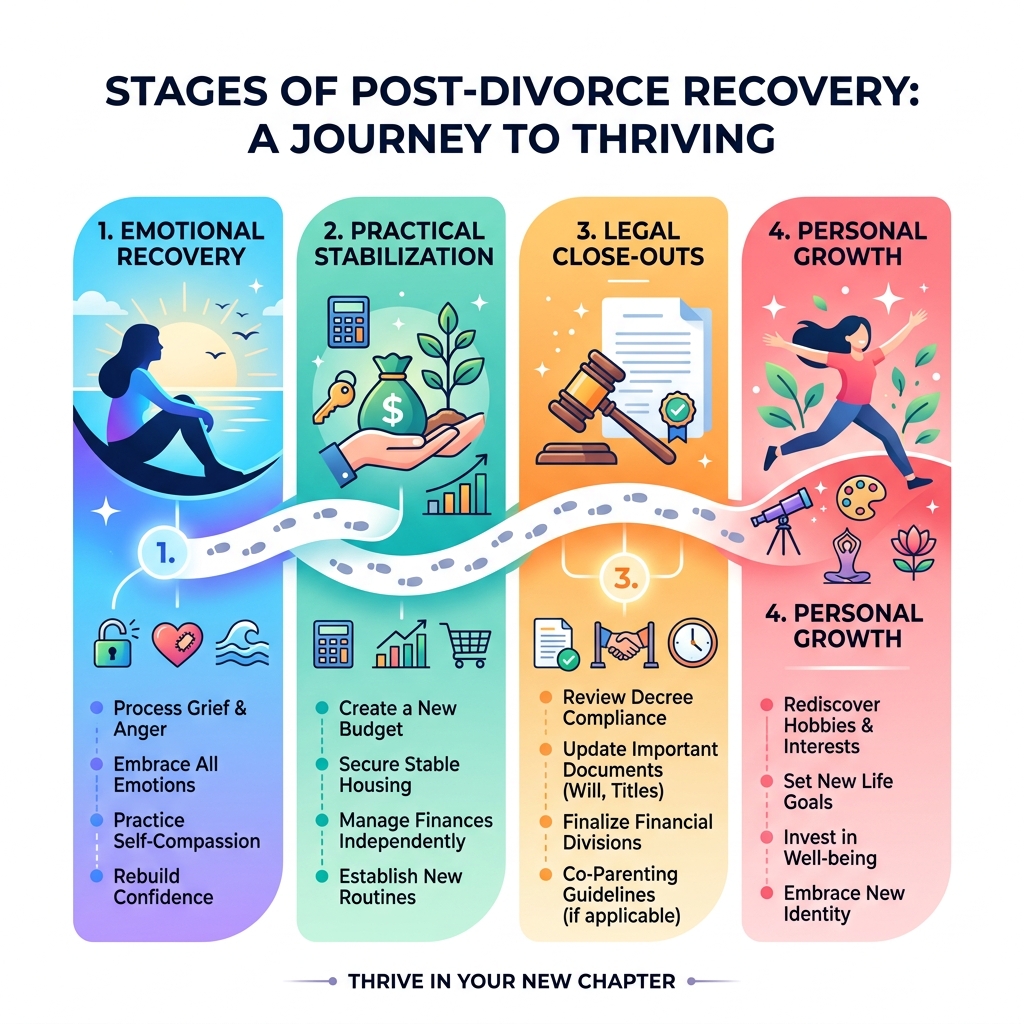
Navigating life after divorce: The Emotional Roadmap
When we talk about navigating life after divorce, we have to address the elephant in the room: the emotional “hangover.” Even if the split was amicable, the day after the decree is signed can feel like you’ve been hit by a truck. You might expect to feel pure relief, but instead, you find yourself mourning a version of the future that no longer exists.
It is vital to recognize that there is no “right” way to feel. You might experience a rotating carousel of grief, anger, relief, and deep confusion. One morning you’re eating cereal for dinner, enjoying the absolute freedom of the remote control; the next, you’re overwhelmed by the silence of an empty house. Both experiences are valid.
Self-compassion is your greatest ally here. We often try to rush the healing process, but emotional recovery doesn’t follow a neat, linear timeline. You aren’t “failing” if you feel sad six months later. You are simply processing a major life shift.
Emotional resilience when navigating life after divorce
Building resilience isn’t about “toughing it out”—it’s about finding the right support systems to help you carry the load. In the beginning, you might be in “survival mode,” where simply getting the kids to school and showing up for work feels like a marathon.
As you move into active recovery, consider these strategies:
- Therapy and Counseling: A professional can provide a non-judgmental space to vent. Unlike friends, who might have their own emotional reactions to your divorce, a therapist offers objective tools for emotional regulation.
- Journaling: Putting pen to paper helps externalize the “thought bubbles” of anxiety floating above your head.
- Mindfulness: Practices like meditation or even simple deep-breathing exercises can help you stay present when the “what-ifs” about the future start to spiral.
- Processing Loss: Even if the marriage was unhealthy, you are allowed to grieve the loss of the dreams you once had.
According to experts at the Life After Divorce: How You Can Start Again, recognizing these feelings as normal is the first step toward emotional recovery.

Practical Steps for Financial and Legal Stability
Once the emotional dust begins to settle, the practical reality of living in a single-income household sets in. Many people underestimate how much their daily expenses change when they go from one household to two. You might save money on the grocery bill, but you’re now responsible for 100% of the rent or mortgage, and often, significantly higher health insurance costs.
If you were covered under your spouse’s health plan, you have 60 days to secure new coverage. COBRA is an option that allows you to keep your existing plan for up to 36 months, but be warned: it is often shockingly expensive because you must pay the full premium plus a 2% administrative fee. Checking the healthcare marketplace or your own employer’s options is usually a more budget-friendly move.
We recommend building an emergency fund of three to six months of living expenses as soon as possible. This acts as a psychological and financial safety net. Additionally, if you haven’t had credit in your own name, open a credit card, use it for small monthly purchases, and pay it off in full to start building your own financial footprint. For more tailored help, check out our advice for single parents.
Legal modifications while navigating life after divorce
Your divorce decree isn’t just a piece of paper; it’s a roadmap of legal obligations. Failing to follow it can lead to contempt of court, which can result in fines or even jail time.
However, life is dynamic. What worked for a toddler three years ago might not work for a teenager today. You may need to reach back out to legal counsel for post-decree modifications if:
- Income changes: A significant raise or a job loss for either parent may require a child support adjustment.
- Relocation: If one parent moves, the existing parenting plan may become impractical.
- Custody needs: As children age, their schedules and needs evolve.
Don’t forget the “legal loose ends” that often fall through the cracks:
- Beneficiary Updates: Check your life insurance, 401(k), and bank accounts. You likely don’t want your ex-spouse inheriting your retirement fund.
- Estate Planning: Update your will and power of attorney.
- QDROs: Ensure the Qualified Domestic Relations Order is filed to properly divide retirement accounts.
- Property Titles: Ensure vehicles and real estate are officially transferred into the correct name per the decree.
Mastering Co-Parenting and Protecting Your Children
If you have children, navigating life after divorce means you are still in a relationship with your ex—it’s just a different kind of relationship. The most successful co-parents treat their interaction like a business partnership. The “business” is the healthy development of your children.
Research consistently shows that children’s adjustment—academic, social, and emotional—is much more positive when parents communicate cooperatively. It isn’t the divorce itself that usually harms children; it’s the persistent, high-level conflict between the adults.
To protect your kids, keep the conflict away from them. Never use them as messengers or confidants for your feelings about the other parent. When they are at your house, respect the boundaries of the custodial time. If they ask to do something that falls on the other parent’s time, a neutral “You’ll have to check with Dad/Mom about that” is the best response. For help with the logistics, see our guide on how to master your holiday co-parenting calendar.
Using the BIFF method for conflict-free communication
When emotions are high, a simple text about soccer practice can turn into a three-hour argument about the past. To prevent this, we advocate for the BIFF method, popularized by Bill Eddy. This approach keeps communication professional and minimizes “hooks” that lead to conflict.
BIFF stands for:
- Brief: Keep it short. No long explanations or venting.
- Informative: Give the necessary facts (dates, times, locations).
- Friendly: Use a neutral, polite tone. A simple “Thanks” or “Have a good weekend” goes a long way.
- Firm: State your position clearly and don’t leave room for endless negotiation if a decision has been made.
Many parents find success using co-parenting apps like OurFamilyWizard or AppClose. These tools provide a documented, structured channel for communication and scheduling, which reduces the need for direct, stressful contact. You can also keep a weekly “log” to exchange information about school projects or health issues. Balancing these new responsibilities can be tough, so read our tips on how to balance work and parenting.
Rebuilding Your Social Network and Reclaiming Identity
Divorce can be isolating. You might find that some “couple friends” drift away, or you simply don’t have the energy to socialize. However, isolation is one of the biggest risks to your mental health during this time.
While leaning on close family is great, don’t underestimate the power of “weak ties.” These are the casual acquaintances—the person at the gym, the barista, or the other parents at school. Social science research shows that these small, low-stakes interactions can significantly boost our sense of belonging and well-being.
This is also your time for personal reinvention. For years, your identity may have been tied to being a “spouse.” Now, you have the opportunity to rediscover the interests you put on the shelf. Maybe you always wanted to try pottery, or you stopped hiking because your ex didn’t like it. Reclaiming these hobbies isn’t just “fun”—it’s a vital part of rebuilding your sense of self. For more on managing this new lifestyle, see how to balance work and parenting 2.
Long-term success in navigating life after divorce
As you move further away from the final decree, you might start thinking about dating. Our best advice? Don’t rush it. Most experts suggest waiting at least six months to a year before making major life decisions, including entering a serious new relationship.
Use this time to reflect on your past relationship patterns. What were the “red flags” you missed? What does a healthy relationship actually look like to you now? John Gottman’s research on the “Four Horsemen” (criticism, contempt, defensiveness, and stonewalling) can be a great guide for what to avoid in the future.
Success in navigating life after divorce is found when you realize that your divorce doesn’t define you—it’s just one chapter in a much longer, more interesting story.
Setting SMART Goals for Your New Chapter
To move from “just getting by” to truly thriving, you need a plan. We like to think of this as your “Business Plan for Life.” Using the SMART goal framework ensures your goals are realistic and actionable.
| Feature | Survival Mode | Thriving Mode |
|---|---|---|
| Focus | Getting through the next hour | Planning the next year |
| Finances | Paying immediate bills | Building wealth and credit |
| Emotions | Reacting to triggers | Proactive self-care and growth |
| Routine | Chaotic or non-existent | Structured and goal-oriented |
| Social Life | Isolation or “venting” only | Diverse support and new hobbies |
How to set SMART goals for your recovery:
- Specific: Instead of “I want to be happy,” try “I will join a local hiking club.”
- Measurable: “I will save $200 a month for my emergency fund.”
- Achievable: Don’t try to run a marathon in week one. Maybe start with a 15-minute walk.
- Relevant: Ensure the goal actually helps your new life, not someone else’s expectations.
- Time-bound: “I will have my estate plan updated by the end of next month.”
Setting these goals helps you regain a sense of agency. You aren’t just a passenger in your life anymore; you are the driver.
Frequently Asked Questions about Life After Divorce
How long does it take to feel “normal” after a divorce?
While every journey is unique, many people find that the first year is the hardest as they navigate “firsts” (the first holiday, the first birthday, the first school event alone). Generally, it takes about one to two years to establish a solid “new normal” where the routines feel automatic and the emotional triggers become less frequent.
When should I seek professional therapy or legal counsel?
You should seek therapy if you feel “stuck”—if anger, sadness, or anxiety is preventing you from functioning at work or caring for your children. Regarding legal counsel, you should reach out whenever there is a significant change in circumstances (like income or living situation) or if your ex-spouse is consistently failing to follow the court-ordered decree.
How can I protect my children from parental conflict?
The best way to protect your children is to keep them out of the middle. Don’t argue in front of them, don’t speak poorly of the other parent, and ensure they know the divorce is not their fault. Treating co-parenting like a professional business partnership is the most effective shield you can provide.
Conclusion
At Curta Arte, we know that navigating life after divorce is a marathon, not a sprint. Writers like Aria James are dedicated to providing the empathetic, targeted guidance you need to handle the unique challenges of single parenting and solo living.
Divorce is a conclusion to one chapter, but it is also the opening line of the next. By stabilizing your finances, mastering co-parenting, and investing in your own emotional growth, you aren’t just “starting over”—you are building something better. You have the resilience to thrive, and we are here to support you every step of the way.
For more resources on thriving as a solo parent, Contact us for more parenting tips.
